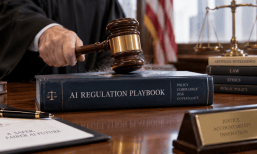
This lack of oversight underscores the urgent need for global artificial intelligence (AI) regulation, Brad Smith said in a BBC interview Monday (Oct. 12).
“Right now, your washing machine is subject to more safety rules than AI,” Smith said. “Every carton of milk that you see in the grocery store is subject to safety rules and inspection.”
Smith said global safety rules are needed, such as legal requirements to inform victims of agentic AI breaches, along with determining when third-party evaluators should endorse an AI product before launch.
The BBC report notes that demands for more AI oversight have increased as experts in the industry warn that they think the technology is a threat. The heads of American AI giants like OpenAI and Anthropic have supported calls for a slowdown in AI development, something the White House has pushed back on.
Smith told the BBC’s Big Boss Interview podcast that AI is both a “tool and a weapon” that urgently needed regulation.
“Let’s get started today,” he said, adding that companies need “emergency brakes” — otherwise known as “kill switches” — to halt or slow AI if it gets out of control.
We’d love to be your preferred source for news.
Please add us to your preferred sources list so our news, data and interviews show up in your feed. Thanks!
Smith also argued companies should be legally mandated to create “incident reports” and tell victims if their AI goes rogue, while suggesting that independent government evaluators should vet new artificial intelligence technology.
“We know how to do this for other products,” Smith said. “We should build on that knowledge and think about how to apply it to AI.”
Smith’s comments came two days after Microsoft CEO Satya Nadella made a similar call for greater AI safety measures.
“We must assume a model is compromised and contain it from the start,” Nadella wrote in a post on X. “Think of it like an emergency brake. An authorized person should always be able to pause or shut down a model mid-task.”
In other artificial intelligence news, PYMNTS spoke with Preeti Krishnan, founder of Leela. That’s a platform that uses AI agents to perform compliance work for financial institutions.
For smaller financial businesses, Leela’s technology can make capabilities usually associated with bigger compliance departments more accessible, that Monday report said.
“No matter what size you are, you can have access to a 10-person compliance team, if that’s something that would be of value to you,” Krishnan told PYMNTS
Larger institutions, meanwhile, could use agents to boost the capacity of existing teams, while keeping consequential regulatory decisions in the hands of humans.



 Add as Preferred Source