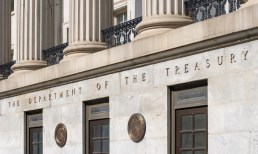
Treasury’s effort to regulate payment stablecoins hinges on questions on when a coin has actually been issued, who issued it and how a stablecoin created outside the country can legally reach a customer in the United States.
The department’s proposed rule, published Aug. 18, would implement statutory restrictions on issuing payment stablecoins in the United States and on digital asset service providers offering or selling them to people here. The GENIUS Act also gives Section 3 extraterritorial effect when conduct involves an offer or sale to a person located in the United States.
The proposal addresses when an issuance occurs, the location of an issuer and recipient, foreign issued stablecoins, digital asset service providers and knowing participation in an unlawful issuance.
Letters issued during the commentary period, which closed on Monday (Oct. 19), offer a glimpse into what banks and other players want to see from Treasury. The repository of letters is available here.
What Counts as Issuance
ANB Bank wants Treasury to look at the functions behind a stablecoin when determining who qualifies as its issuer.
In its letter, ANB said entities should be considered issuers when they exercise “meaningful control” over creation, redemption, reserve management, governance or the economic benefits associated with the stablecoin.
The bank specifically warned about affiliated companies dividing issuance, reserve management, technology, marketing and redemption functions among themselves. It advised Treasury to presume that an organization falls within the licensing framework if it directs or controls the stablecoin program, benefits economically from it or presents itself publicly as its sponsor.
We’d love to be your preferred source for news.
Please add us to your preferred sources list so our news, data and interviews show up in your feed. Thanks!
Community banks depend on deposits to fund lending. ANB said in its letter that, to the extent payment stablecoins substitute for traditional transaction balances, funds could migrate away from insured depository institutions.
Chainalysis offered up comments on identifying the issuance event itself. Treasury’s proposal treats the first transfer by an issuer that results or will result in another person obtaining rights to use, transfer or redeem the stablecoin as an issuance. Chainalysis supports anchoring that point to the first transfer out of issuer-controlled addresses because the transaction produces an observable blockchain record.
Ripple focused on the legal responsibility behind issuance. The company supports Treasury’s proposed definition of issuer because it ties issuer status to both the redemption obligation and the representation that the coin maintains a stable value. Ripple argues that neither element should be enough by itself, warning that otherwise affiliates and brand owners could become issuers without owing holders a redemption obligation, while liquidity providers, reserve managers and other firms could be captured despite not representing that they maintain the coin’s stable value. “Requiring both keeps issuer status with the person whose obligation and representation give the payment stablecoin its stable value,” Ripple said in its letter.
Foreign Stablecoins and US Distribution
Mastercard, meanwhile, said in its missive that it supports Treasury’s proposed approach for determining when offshore issuance remains outside the U.S. rules. The comments detailed proposed reasonable-belief framework over stricter alternatives, under which a foreign issuer can remain outside the U.S. issuance rules when it reasonably believes recipients are outside the country, does not target or solicit U.S. persons and maintains controls intended to prevent U.S. issuance. Mastercard said the approach recognizes that firms “cannot always prevent inadvertent cross-border activity despite having reasonable controls in place.”
The New York State Department of Financial Services (NYDFS) contended that Treasury’s proposal is “overly permissive” toward secondary U.S. sales of foreign-issued payment stablecoins. The regulator points to Treasury’s own recognition that an offshore issuance could be structured to put newly issued stablecoins into U.S. circulation through “an affiliate, distributor, market maker, platform, or other intermediary.” NYDFS argued that this could put U.S.-regulated issuers at a competitive disadvantage.
In its comments, Coinbase encouraged Treasury to confirm that a digital asset service provider can use a foreign stablecoin that does not qualify for U.S. distribution as an intermediate asset in a cross-border payment, provided the U.S. customer never holds or owns that stablecoin. Coinbase’s reasoning contends that the restriction in Section 3 turns on whether a person in the United States acquires the coin, rather than whether it passes through a service provider during the transaction.
“In neither transaction described,” said Coinbase, “does a U.S. person buy, hold, or acquire any right to use, transfer, or redeem the non-qualifying foreign payment stablecoin,” according to the letter. The company gave examples involving both payments coming into the United States and payments sent by U.S. customers to recipients abroad.


 Add as Preferred Source