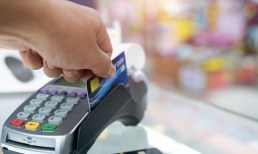
Countries around the world have become accustomed to flashing plastic to make payments. Yet Germany still remains a country that predominantly uses cash.
According to a new study reported by MasterCard, the cost of using cash isn’t cheap, especially for Germans. The study revealed that every German resident pays about €150 every year to sustain the country’s cash system. In total, the production process to circulate cash in Germany costs €12.5 billion per year. If this seems reasonable, try comparing it to the €1.4 billion it costs to use cards, and think again.
Cash is commonly used in Germany, and often times preferred – especially by small business owners, local supermarkets and restaurants. Locations that do accept card payments are sometimes fickle, and only accept certain card types.
Moreover, the frequent cash use in Germany isn’t exclusive to small shops. Some of the largest supermarkets in Germany won’t even accept credit card payments, and it is not out of the ordinary to see locals pay for expensive luxury items in cash.
Javier Perez, president of MasterCard Europe, stated, “The use of cash, which is still significant in many countries around Europe. Comes at a high cost to the economy.”
Where do the costs come from?
Advertisement: Scroll to Continue
The answer is multi-faceted since costs are incurred at several points during the cash cycle process: production costs, transportation costs, insurance fees, cash handling and management costs, security, and don’t forget the costs of fraud and interest losses.
We’d love to be your preferred source for news.
Please add us to your preferred sources list so our news, data and interviews show up in your feed. Thanks!
Alas, the question that naturally follows is obvious: who pays for all of these costs?
The largest burden is transferred to merchants, who pay about €6.7 billion per year to handle cash. German banks are second in line, and pay about €4.5 billion. Lastly are the consumers, who are paying €1.3 billion each year.
Since Germans are constantly carrying cash, ATMs are easy to find and often available 24/7. However, German consumers have complained about high cash point charges. ATM fees generally have a fixed amount of €4-6, reported InterNations.
Assuming merchants and consumers are in favor of saving money, the aim would be to reduce cash payments and move towards cashless methods. MasterCard reported that card transactions have proved to be a less costly form of payment for all parties.
It may be in Germany’s best interest to find alternatives to cash payments, since the subsequent benefits could be felt both nationally and internationally. Minimizing the use of cash would be more effective if constituents understood the costs of cash and the heavy burdens that arise from it. Many are unaware of the economic costs and the complete process of the payment system.
Professor Jens Kleine, who presented the study on the cost of cash in Germany to MasterCard, stated, “In order to reduce the cost of the payment system, individuals need to understand the real costs of the different payment methods.”
To read the full story at MasterCard click here, or to read the article at InterNations click here.
Or to view the study’s infographic look below.



 Add as Preferred Source