Seeking Alpha reported Monday (Aug. 24), citing a paywalled article by Business Insider, that Amazon is developing an automated delivery-station concept that could process packages at about 2.5 times the rate of the company’s existing delivery stations.
The report said that this initiative, known internally as Project Tetromino, aims to use artificial intelligence and robotics to automate work such as organizing packages and preparing them for delivery vehicles.
Amazon plans to launch a pilot facility in 2028 and then follow it with additional sites, the report said.
The Business Insider report was based on a review of an internal planning document, and the report said Amazon disputed the timeline and financial projections in the document.
We’d love to be your preferred source for news.
Please add us to your preferred sources list so our news, data and interviews show up in your feed. Thanks!
Reached by PYMNTS, Amazon spokesperson Brad Glasser said in an emailed statement that the report’s details are inaccurate.
“We’re always exploring and testing new technologies across our operations to improve safety and the delivery experience for customers,” Glasser said. “The details cited here are inaccurate and don’t reflect our current plans. Like any early-stage concept, this is one of many initiatives we regularly evaluate, and plans evolve significantly as we learn.”
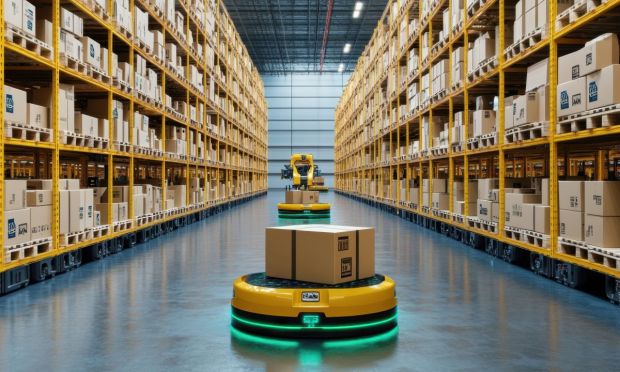
PYMNTS reported in March that Amazon has spent more than a decade automating its logistics network. The report said that Amazon has already deployed more than 1 million robots across its operations and that the company has made acquisitions that have steadily extended machine capability deeper into the fulfillment stack.
In May 2025, Amazon announced that between 2021 and the end of 2025, it was investing more than 700 million euros (about $817 million) in delivery station technology across Europe.
During a July earnings call, Amazon said that it delivered more than 40% more items the same day or overnight during the first half than it did a year earlier; expanded its Amazon Now service, which promises delivery in 30 minutes or less, to 80 additional U.S. cities and towns; and introduced Supply Chain Services so outside businesses can use its network to move, store and deliver goods.
It was reported in July 2025 that Amazon had reached a record 1 million-plus robots working in its warehouses and that the company would soon have as many robots as humans in these facilities.
The machines include wheeled robots that move goods around the floor for packaging, arms that help sort products and a robot equipped with a sense of touch that allows it to pluck products from shelves.
Tye Brady, Amazon Robotics’ chief technologist, said at the time that the new robots are designed to make Amazon workers’ jobs easier rather than replacing them.


 Add as Preferred Source