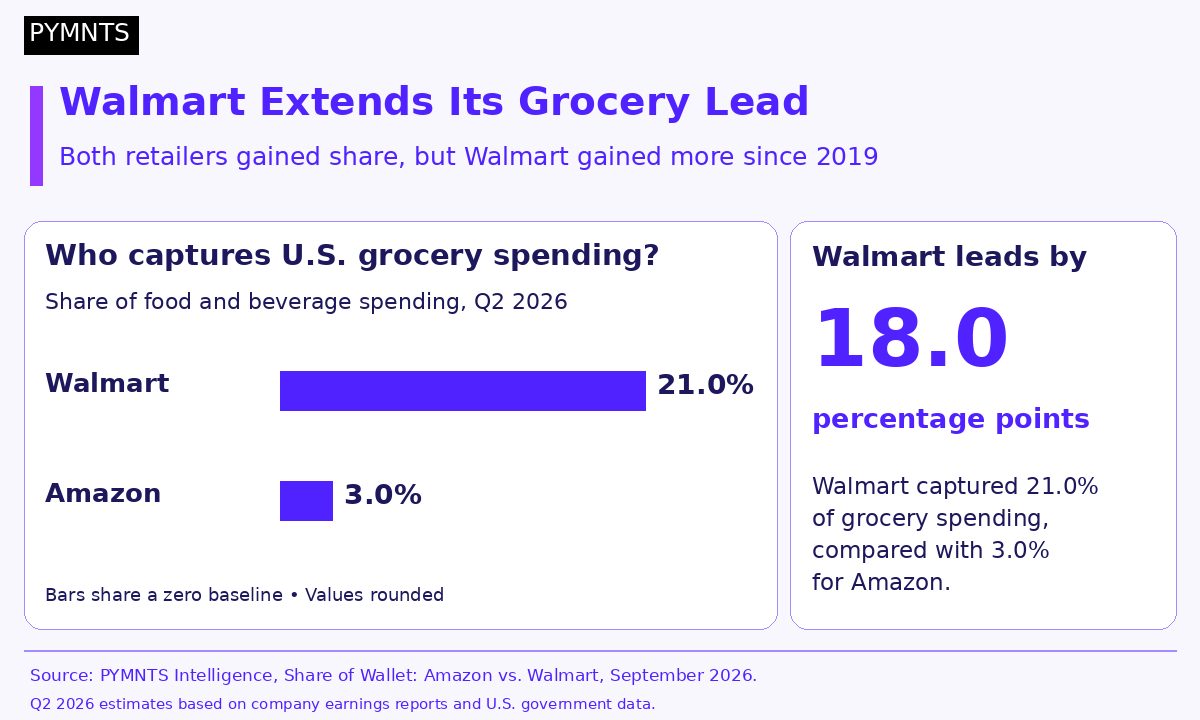
The PYMNTS Intelligence report “Amazon Takes Five Categories as Walmart Tightens Its Grocery Grip” found in September that Amazon led Walmart in five of seven retail categories during the second quarter of 2026 and captured a record 9.59% of total retail spending in the United States. Walmart captured 7.5%. Grocery told a different story. Walmart increased its share of food and beverage spending to nearly 21%, compared with roughly 3% for Amazon. The report drew on company earnings reports and federal spending data, giving retailers a view of how consumers divide their purchases.
Three findings show why grocery continues to support Walmart’s business:
- Walmart’s grocery gains continued even as its overall share slipped. Its share of food and beverage spending rose 0.31 percentage points from a year earlier to 20.97%, a second-quarter high. Meanwhile, its total retail share fell from 7.72% to 7.5%. The figures showed that Walmart’s broader decline didn’t extend to its largest category. Shoppers continued directing a larger portion of their grocery dollars to the retailer.
- Amazon grew in grocery, but Walmart increased its advantage over time. Amazon’s share rose from 1.78% in 2019 to 2.95% in 2026. Walmart’s rose from 18.4% to 21%. That left Walmart with an 18-percentage-point lead, up from 16.6 points seven years earlier. Both companies gained share, providing evidence that each can expand its grocery business. Amazon’s gains, however, haven’t reduced Walmart’s lead over that period.
- Grocery gives Walmart a recurring connection with shoppers. Food and beverages accounted for roughly 60% of Walmart’s retail business, a proportion that has held steady since 2019. Grocery acts like an anchor for the shopping trip, giving customers a regular reason to visit and opportunities to buy other products while they’re there. The report identified grocery as the most stable category in the companies’ competition, with purchases still closely tied to physical stores.
Elsewhere, the report revealed that categories such as furniture and electronics, where shoppers can readily order without visiting a store, reached 24% of retail spending, up from 21.1% in 2019. The shift favored Amazon. Walmart also retained its advantage in auto parts, its only other category lead.
For retailers, the findings point to continued opportunity in serving frequent, immediate needs, even as more discretionary purchases move online.
At PYMNTS Intelligence, we work with businesses to uncover insights that fuel intelligent, data-driven discussions on changing customer expectations, a more connected economy and the strategic shifts necessary to achieve outcomes. With rigorous research methodologies and unwavering commitment to objective quality, we offer trusted data to grow your business. As our partner, you’ll have access to our diverse team of PhDs, researchers, data analysts, number crunchers, subject matter veterans and editorial experts.