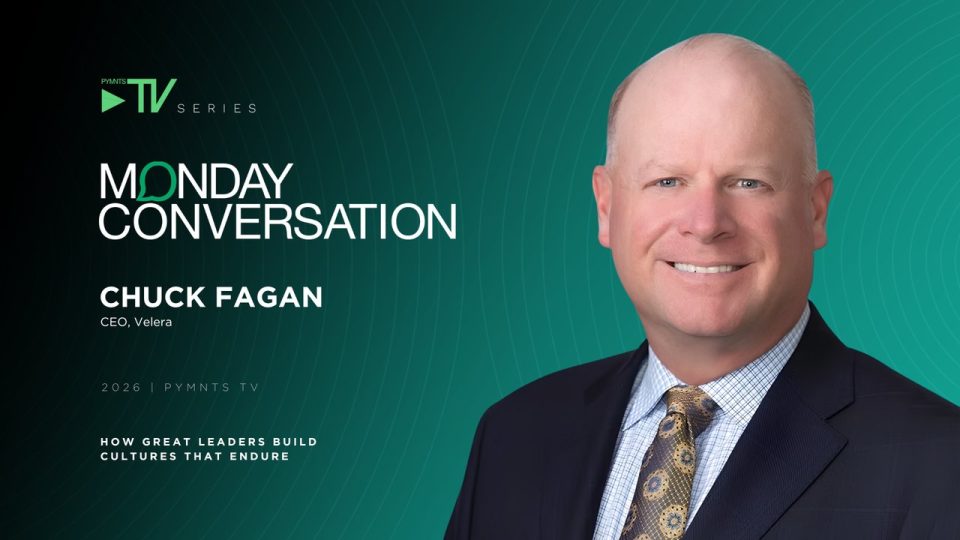
Chuck Fagan has spent more than three decades watching technology reshape financial services. Along the way, he has seen credit unions adapt to online banking, mobile apps, digital wallets, real-time payments and now, artificial intelligence.
Yet when asked what matters most to the industry’s future, Fagan did not begin with technology. Instead, he began with people.
That perspective says as much about the evolution of credit unions as it does about Fagan’s own career. Retirement closes his tenure as CEO of Velera, but it also arrives at a moment when the industry faces another period of rapid change. AI promises to alter commerce. Payments continue to move faster. Consumers expect digital experiences that rival those offered by the world’s largest technology companies.
Fagan said the developments raise a familiar question. How can credit unions embrace innovation without surrendering the member relationships that have long distinguished them, in the 21st century, where he also welcomed twin grandchildren?
“The technology is going to be the way the twins can connect and want to interact, but when they do need a person, that it’s available to them,” Fagan told PYMNTS CEO Karen Webster.
COVID-19 reinforced that lesson more forcefully than any strategic plan could have.
The pandemic compressed years of payments change into a remarkably short period, driving consumers toward digital commerce almost overnight while forcing financial institutions to rethink fraud, service models and operational priorities. The migration from counterfeit fraud to card-not-present fraud accelerated. Mobile wallets became commonplace. Speed replaced convenience as the standard by which consumers judged financial services.
“Everything is about speed now,” Fagan said.
That reality is extending from buy now, pay later products to stablecoins and AI, all of which continue to shorten the distance between a consumer’s decision and the movement of money, Fagan said.
AI represents the newest chapter in the progression, but Fagan said he does not regard it as a revolution detached from everything that came before. Instead, he said he believes AI’s success depends on disciplined preparation.
“You better get your data right, so you can maximize the capabilities of AI,” Fagan said, adding that, in the end, the technology “should be nothing but a positive in the payment space.”
PYMNTS’ Webster suggested consumers may adopt those capabilities faster than many institutions expect because they are already comfortable incorporating AI into everyday activities.
Fagan said AI will deliver its greatest value only if financial institutions first build reliable data foundations. Once those foundations exist, he said he believes the technology can improve everything from cash flow for small businesses to decision-making for consumers, making financial interactions faster without sacrificing quality.
In 2015, when Fagan became president and CEO of Velera, which was called PSCU at the time, he inherited a credit union service organization that needed to rebuild its culture and its connection with the credit union community.
The effort began with what Fagan described as three priorities: restore, reestablish and resurge.
Strategy succeeds only when employees understand how their individual responsibilities contribute to the organization’s broader mission, Fagan said. First impressions matter, whether they come from a sales presentation, a call center interaction or the appearance of the company’s facilities. Every employee influences the member experience.
That philosophy also shaped Velera’s direction.
Rather than treating digital banking as a separate business, Fagan said he believed it had to become part of the relationship between members and their credit unions. As he saw it, “the intersection of payments and digital mobile is just a collision course.”
We’d love to be your preferred source for news.
Please add us to your preferred sources list so our news, data and interviews show up in your feed. Thanks!
His support for Lumin Digital reflected that view. Digital channels, payments and transaction data were beginning to converge, creating opportunities for credit unions to understand members more completely and serve them more effectively.
The Next Generation Faces a Different Test
If the first chapter of Fagan’s career was defined by helping credit unions adapt to technology, he said he believes the next chapter will be defined by how they choose to use it.
That is one reason he pushes back against several enduring misconceptions about the industry. Credit unions are no longer lagging the technology curve simply because they lack the investment budgets of the nation’s largest banks, Fagan said. Instead, they have learned to rely on partnerships and open technology architectures that allow them to assemble sophisticated digital capabilities without building every component themselves.
The greater risk is moving too cautiously, Fagan said.
For years, credit unions could afford to be careful adopters, watching new technologies mature before making significant investments. Fagan said he believes that window has largely closed.
“Being a fast follower is not good enough anymore,” Fagan said. “You don’t have to be bleeding edge, but you really need to be leading edge.”
That philosophy reflects how consumer expectations have evolved. Members no longer compare their credit union solely with another financial institution. Every digital interaction, whether ordering dinner, booking travel or paying a bill, shapes what they expect from every other service they use.
Those lessons also shaped Fagan’s approach to leadership. He said one piece of advice from an early mentor stayed with him throughout his career.
“CEOs are seldom told the complete truth,” Fagan said. “Find people willing to give it to you and keep them close by.”
The advice reflected more than good management. It underscored the importance of surrounding leadership with people willing to challenge assumptions before markets do.
Retirement, meanwhile, will not take Fagan far from the industry he has spent a lifetime helping shape. He plans to serve as a senior adviser to several organizations, remain active on university and FinTech boards, and spend a few months deciding what comes next after a career spent on airplanes and in boardrooms.
His operating role may be ending, but the questions he leaves behind are likely to occupy credit union executives for years to come. Technology will continue to advance. Consumer expectations will continue to rise. The institutions that prosper will be those that remember innovation is valuable only when it strengthens the relationship between members and the people they trust with their financial lives, Fagan said.
Watch the full interview with Velera CEO Chuck Fagan to learn more about:
- Why Fagan said credit unions can no longer rely on being “fast followers.”
- How COVID-19 permanently altered the pace of payments innovation and fraud.
- Why Fagan sees AI as an opportunity built on data, rather than a technology searching for a purpose.
- The leadership lessons Fagan hopes will guide his successor and the next generation of credit union executives.


 Add as Preferred Source