The retail landscape is showing signs of becoming a platform economy. After staring down the better part of a decade of operational uncertainty, companies are turning to scale as a strategy.
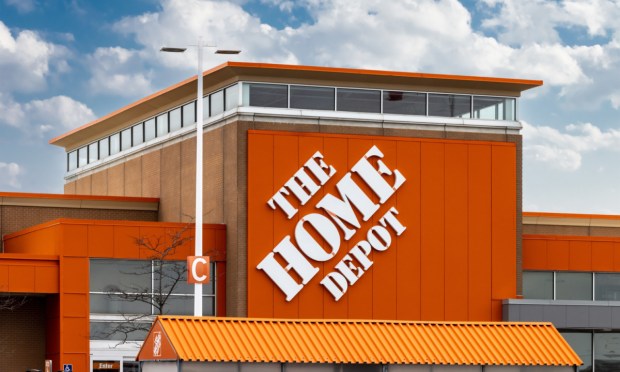
That, at least, was the case this most recent quarter for both Lowe’s and The Home Depot, where the two companies collectively indicated that the home improvement sector may be evolving into something structurally different from traditional retail, and even something structurally different than traditional home improvement.
Historically, investors evaluated Home Depot and Lowe’s through the lens of housing cycles and consumer spending. Today, both companies resemble infrastructure platforms serving the contractor economy. The real story is no longer lawn and garden demand, weather volatility or appliance promotions. It is the emergence of a new competitive model built around professional contractors, integrated logistics, artificial intelligence (AI)-powered workflow tools and construction-oriented distribution networks.
Home Depot, which reported its first quarter 2026 earnings Tuesday (May 19), stressed to investors a message of industrial scale and contractor dominance. Lowe’s, reporting its own first quarter 2026 results on Wednesday (May 20), highlighted a strategy of operational modernization and customer ecosystem expansion.
Both retailers reaffirmed guidance, and both insisted that demand remains stable. But perhaps the clearest signal from the retailers’ earnings calls this week was that the professional contractor, and not the weekend DIY consumer, is now the primary home improvement battleground.
See also: The Riskiest Words in B2B: This Is How We’ve Always Done It
The Pro Customer Has Become the Strategic Center of Gravity
The underlying economics of B2B home improvement are, admittedly, attractive. Professional contractors generate larger basket sizes, purchase with greater frequency and tend to remain active even when discretionary consumer spending weakens. Home Depot described the Pro market opportunity as roughly $700 billion, while broader specialty distribution opportunities push its total addressable market closer to $1.2 trillion.
Rather than operating purely as a retailer, Home Depot is evolving into a hybrid retail-distribution platform with branch networks, field sales teams, delivery fleets and specialized contractor relationships. The company’s recent acquisitions reflect that thinking. The purchase of Mingledorff’s, an HVAC distributor operating across the Southeast, builds on earlier expansion through SRS Distribution and other specialty businesses.
Lowe’s, meanwhile, is pursuing a parallel strategy through acquisitions like FBM and ADG, while investing heavily in “Pro Extended Aisle” capabilities that allow contractors to access broader assortments without requiring additional in-store inventory.
Contractors increasingly value fulfillment speed, workflow integration, inventory reliability and delivery precision more than simple pricing advantages. Both companies are responding by building systems that resemble enterprise supply chains as much as traditional retail operations.
Executives repeatedly pointed to aging housing stock, underbuilding, homeowner equity gains and long-term repair demand as enduring supports for the category. Even if discretionary remodeling remains soft in the short term, the logic goes, homes still require maintenance, upgrades and replacement systems over time.
See also: Lowe’s Thinks Smarter Shelves Can Win the Pro Customer
We’d love to be your preferred source for news.
Please add us to your preferred sources list so our news, data and interviews show up in your feed. Thanks!
Fulfillment Has Become Home Improvement’s New Competitive Moat
Location density has traditionally defined advantage in home improvement retail. Today, fulfillment orchestration may matter more. Both retailers repeatedly emphasized delivery speed, inventory optimization and interconnected fulfillment capabilities during their earnings discussions.
Home Depot described a proprietary “ship from best location” system that dynamically routes orders based on inventory position, speed and proximity. Management described a combined network of 2,360+ stores, 1,300+ branches, 16,000 delivery assets and 5,000+ salespeople.
That evolution also creates barriers to entry. Regional competitors may match pricing in isolated categories, but replicating integrated delivery networks, branch infrastructure, inventory systems and AI-enabled routing capabilities requires enormous capital investment.
Lowe’s is investing into trying to close the structural moat Home Depot has built over decades with Pros, and the company’s executives highlighted expanded same-day delivery and upgraded omnichannel fulfillment infrastructure. Lowe’s also highlighted AI-powered quoting tools capable of turning handwritten notes, PDFs, spreadsheets and photos into contractor-ready quotes within minutes.
Internally, management disclosed that employees have submitted millions of questions through its AI-enabled Mylow Companion system and pointed to measurable productivity gains across software development and operations.
“AI is making the biggest impact in demand forecasting and inventory optimization, where it can process far more variables than traditional methods,” Camille Fratanduono, Lowe’s senior vice president, inventory replenishment and planning, told PYMNTS in an interview last month. “The power of AI allows us to be more precise in how we position inventory. This improves in-stocks on high demand items while reducing excess.”
Still, it was apparent during the Q&A section of this week’s earnings calls that investors are desperately trying to determine whether the U.S. consumer is rolling over.
“No collapse. No rebound. Just steady, sluggish demand,” was essentially Home Depot’s reply.
Lowe’s repeatedly described a “K-shaped economy” with cautious lower-income consumers and resilient higher-income homeowners, describing the environment as difficult, but highly stable.
For all PYMNTS B2B coverage, subscribe to the daily B2B Newsletter.


 Add as Preferred Source