Emergency expenses can be relative based on one’s financial wellness, but the fact is, millions of American households don’t have the funds to pay for an unexpected crisis.
Moreover, the $400 emergency figure used for years as a kind of benchmark by the Federal Reserve is woefully out of date. According to the study “New Reality Check: The Paycheck-to-Paycheck Report: Emergency Spending Edition,” a PYMNTS and LendingClub collaboration, in the last 90 days, 46% of emergency expenses cost over $400, averaging roughly $1,400. This puts a new spin on how strapped consumers can respond, including solutions like personal loans.
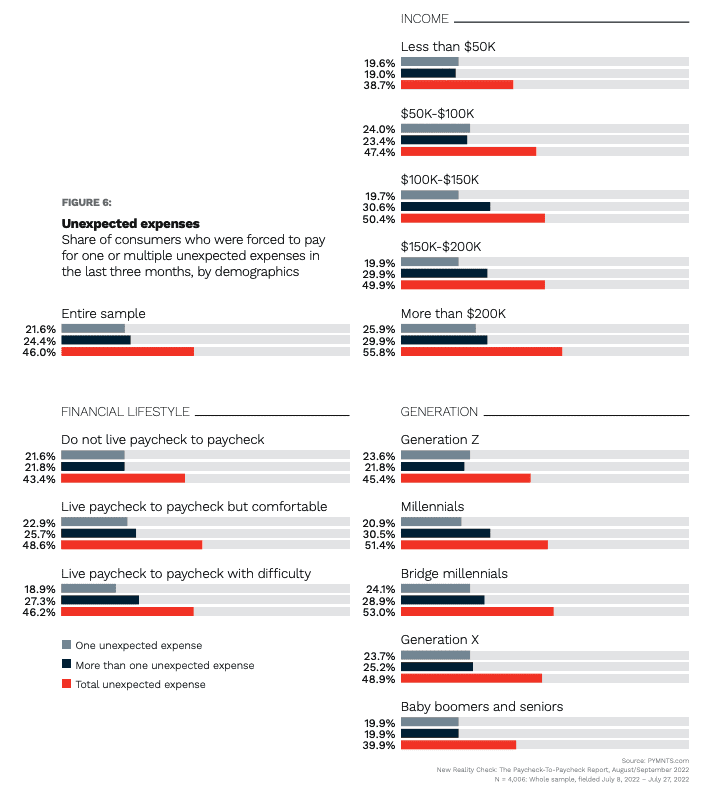
Emergencies are no respecters of person or pocketbook, and PYMNTS’ latest research found that almost half (46%) of consumers encountered a costly crisis in the past three months. We also found strong generational correlations in the data.
“Fifty-three percent of bridge millennials and 51% of millennials faced unexpected expenses in the last 90 days, just 45% of Generation Z consumers and 40% of baby boomers and seniors did so,” the study stated. “Also, 56% of consumers annually earning more than $200,000 had to pay at least one emergency expense, whereas 39% of those annually earning less than $50,000 had to do the same. Higher-income consumers were more likely to face more than one unexpected expense.”
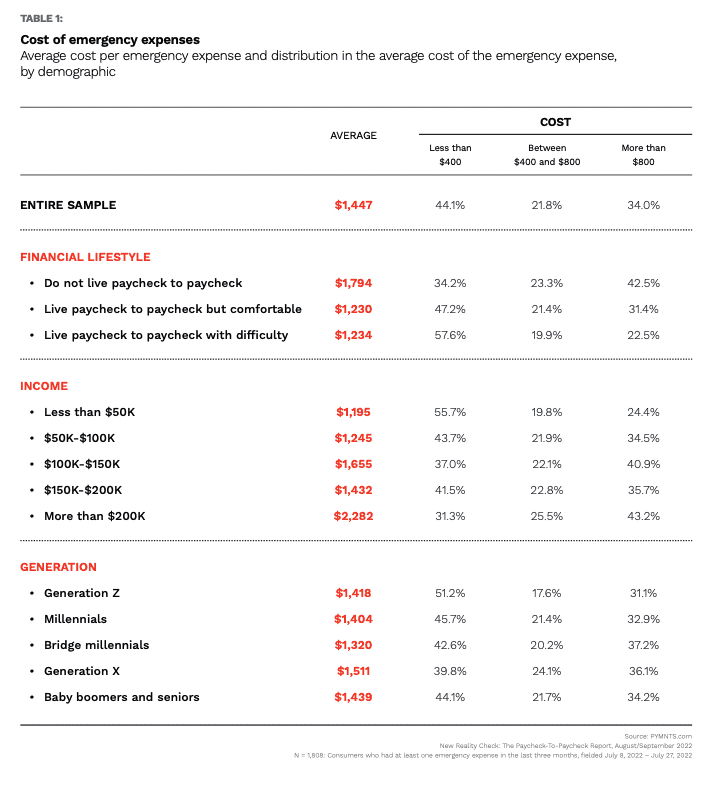
That oft-quoted $400 emergency expense may have been accurate 10 years ago, but new data shows that emergencies, like almost everything else, are getting more expensive.
“According to PYMNTS’ research, 56% of emergency expenses are far more than $400,” the study found. “In fact, emergency expenses average approximately $1,400, with high-income earners and consumers not living paycheck to paycheck reporting significantly higher expenses on average.”
Advertisement: Scroll to Continue
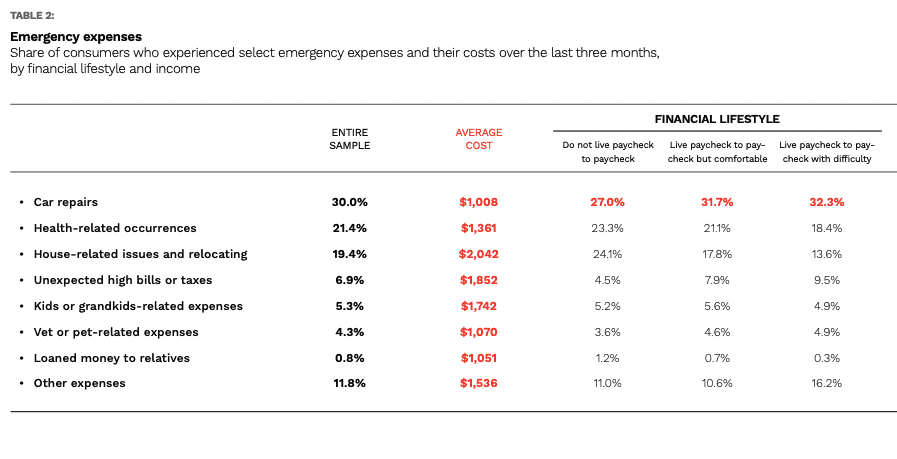
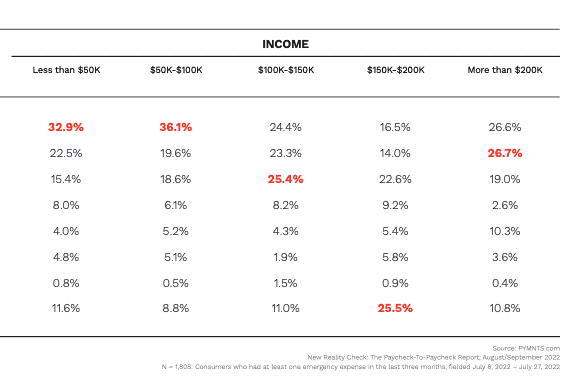
And those emergencies run the gamut from housing to healthcare, but car repair is the most frequently cited one.
“At 30%, car repairs are the most common unexpected expense, and consumers paid an average of $1,008,” the study stated. “The next-most common expenses are health-related, with 21% of consumers facing at least one health-related emergency expense and spending an average of $1,361. Housing- and relocation-related expenses had the highest average cost at $2,042,” faced by 19% of consumers.
Get the study: New Reality Check: The Paycheck-to-Paycheck Report: Emergency Spending Edition