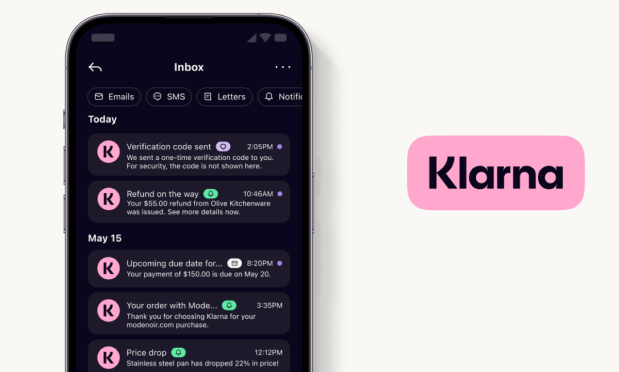
The company has added to its app a Klarna Inbox that mirrors all official communications from the company to the customer, including emails, SMS, push notifications and physical letters, it said in a Thursday (June 4) press release emailed to PYMNTS.
If the customer receives a message anywhere that claims to be from Klarna, they can verify it with the Klarna Inbox. If there’s not a copy of the message in there, the message is not from Klarna, according to the release.
We’d love to be your preferred source for news.
Please add us to your preferred sources list so our news, data and interviews show up in your feed. Thanks!
The Klarna Inbox is now live in the Klarna app in all markets, per the release.
“Financial fraud hurts real people every day, and we’re not going to stand by while scammers impersonate us to steal from our customers,” Klarna Chief Product and Design Officer David Fock said in the release. “Our new inbox gives people a simple way to know what’s actually from Klarna. If you’re unsure about a message, just check the app. If it’s not there, it’s not from us.”
The Federal Trade Commission (FTC) said in April 2025 that impersonation scams cost Americans $2.95 billion in 2024. The agency added that scams in which criminals impersonate businesses and government offices are consistently one of the top frauds reported by consumers.
The PYMNTS Intelligence report “Financial Scams and Consumer Trust” found that 81% of successful scams are impersonation scams in which fraudsters pretend to be trusted authorities, friendly strangers or personal contacts.
Klarna said in its Thursday press release that impersonation scams in which fraudsters pose as a trusted brand are one of the fastest-growing threats facing consumers.
“A fake message claiming to be from a bank, retailer or payments provider becomes the entry point to a customer’s wider financial life,” Klarna said. “Spotting these fake messages is harder than ever.”
Google introduced a feature designed to fight impersonation scams Tuesday (June 2). The company’s fake-call detection feature can identify phone calls that may be from a scammer trying to impersonate one of the recipient’s contacts. It then delivers a warning to the call recipient and suggests that they hang up.


 Add as Preferred Source