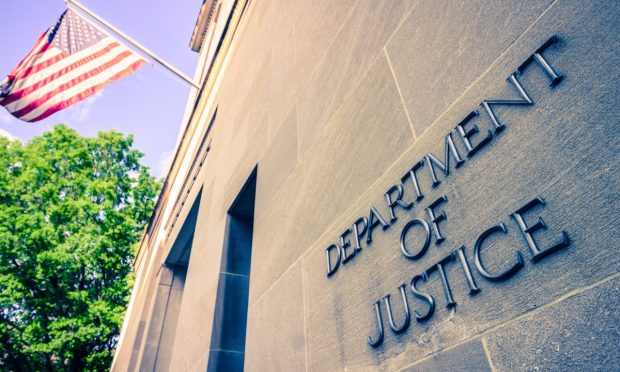
The division’s first comprehensive statement of priorities, issued Aug. 13, covers familiar areas including government procurement, healthcare, tax, international trade and corporate misconduct. But according to an analysis by Robins Kaplan attorneys B. Todd Jones and Allen Slaughter, the more important development is the DOJ’s planned transition from a largely case-driven enforcement system to a proactive, data-driven detection model.
The Department of Justice is building a nationwide organization expected to include approximately 500 attorneys and staff, with further expansion planned over the next two years. Its infrastructure will include a National Fraud Detection Center, data scientists, corporate-enforcement specialists, asset-recovery personnel, appellate lawyers, a privilege review team and technology-supported litigation resources.
The division also will deploy personnel around the country to work with U.S. attorneys’ offices. The DOJ says its objective is to create the world’s most sophisticated data-driven white-collar enforcement organization.
The initiative reflects the purported scale of the problem. Citing a 2024 Government Accountability Office estimate, the DOJ said fraud may cost the federal government between $233 billion and $521 billion annually.
Across the division’s five priority areas, the common thread is the availability of large datasets capable of revealing suspicious patterns, per Robins Kaplan.
In procurement and government programs, the DOJ could combine pricing information, certifications, invoices, ownership records, subcontractor relationships and eligibility data maintained by different agencies. Partnerships intended to eliminate government data silos may allow prosecutors to compare representations that previously remained isolated within individual programs or databases.
Healthcare provides an especially clear example of how the new strategy is expected to work. The DOJ plans to use advanced analysis to identify potential schemes involving Medicare and Medicaid, telemedicine, controlled substances, home health and hospice services, and deceptive marketing. Claims volumes, procedure codes, referral relationships, prescribing behavior and geographic concentrations can all be analyzed for anomalies.
We’d love to be your preferred source for news.
Please add us to your preferred sources list so our news, data and interviews show up in your feed. Thanks!
An anomaly does not establish criminal intent, Robins Kaplan cautioned. It can, however, help prosecutors determine which providers, transactions or relationships warrant investigation.
The Justice Department expects to apply a similar model to tax enforcement, combining analytics, financial forensics and nationwide coordination. The division also signals an “all-tools” approach under which suspected procurement, billing or corporate fraud could generate related tax, money-laundering, false statement and forfeiture exposure.
Its Global Trade & Commerce Enforcement Section will target tariff evasion, illicit transshipment, country-of-origin fraud, customs undervaluation, sanctions evasion and forced-labor supply chains. That means classifications, valuations, supplier representations and sanctions screening can no longer be treated solely as technical trade compliance matters.
For businesses, the central question is whether their compliance systems can detect the same patterns DOJ may find by combining claims, tax, procurement, customs, financial intelligence and investigative data, potentially with the use of artificial intelligence tools.
Boards and compliance teams should map their exposure to the division’s priorities and identify what information their companies routinely submit to agencies, according to Robins Kaplan. They should test whether internal analytics can flag unusual billing concentrations, vendor relationships, reimbursement patterns, customs valuations, payment arrangements or repeated overrides.
Companies also should establish escalation procedures so significant anomalies reach legal and compliance personnel quickly. Speed matters because the DOJ’s department-wide corporate enforcement policy continues to offer potentially substantial benefits, including possible declinations, to companies that voluntarily disclose misconduct, fully cooperate and remediate.
In effect, the new enforcement model creates a race to understand a problem first. As the DOJ improves its ability to find misconduct independently, companies that spend months assessing an issue may discover that the government already has detected the pattern and that their voluntary disclosure options have narrowed.
The practical compliance lesson, Robins Kaplan concluded, is that companies must become better at using their own data before prosecutors use broader datasets against them.


 Add as Preferred Source