AI adoption rose during the 2026 Chinese New Year, per the release.
“From ordering bubble tea and coffee to buying movie tickets, Chinese consumers embraced AI-powered services in everyday scenarios during this year’s holiday, driving a surge in Alipay AI Pay usage,” the company, owned by China’s Ant Group, said in the release.
Alipay AI Pay crossed the 100 million user threshold on Monday, becoming the first AI-native payment product in the world to do so, according to the release. During the week of Feb. 5 through Feb. 11, the platform processed more than 120 million transactions.
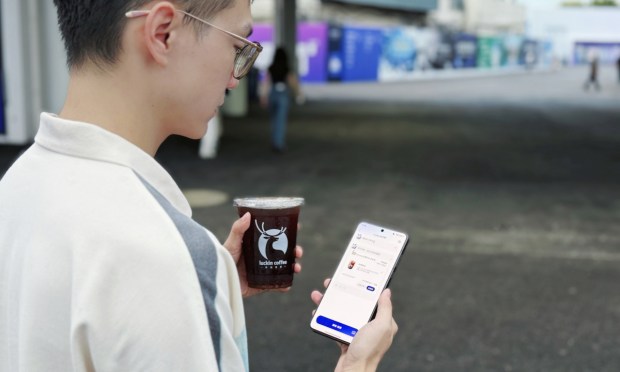
“As agentic commerce accelerates in China, Alipay AI Pay has expanded into various use cases, including AI agents in apps and mini programs for brick-and-mortar retailers like Luckin Coffee, as well as AI smart glasses like Rokid and Alibaba’s consumer-facing AI application Qwen,” the release said.
We’d love to be your preferred source for news.
Please add us to your preferred sources list so our news, data and interviews show up in your feed. Thanks!
Meanwhile, the company’s AQ health app exceeded 100 million users during the holiday, making it the largest AI-native health app in the world, according to the release. This was driven in part by young people coming home for the holiday and introducing AQ to their families.
The company also saw a spike in usage among Chinese travelers on overseas trips Feb. 9-21, jumping 106% from the same period in January, per the release.
“Travelers relied on AQ to manage potential health concerns, including discomfort caused by changes in climate, diet and environment,” the release said.
In related news, Marshall Runge, a cardiologist and former CEO of Michigan Medicine, told PYMNTS in an interview published Monday that he has been surprised at the speed at which AI has become part of healthcare, but also impressed with some of its capabilities.
“AI thinks broadly,” he said, adding that it can hold a patient’s age, medications and underlying conditions in mind simultaneously, making connections that a doctor running behind schedule and juggling a full caseload might overlook.
Still, he said the risks here are real.
“Overreliance. Misplaced confidence. The seductive feeling of a confident answer where clinical uncertainty is the honest truth,” the report said. “AI does not carry a stethoscope. It cannot read a room. It cannot sense that a patient is frightened, or that something in their affect suggests the problem is not what they’re describing.”
For all PYMNTS AI coverage, subscribe to the daily AI Newsletter.


 Add as Preferred Source