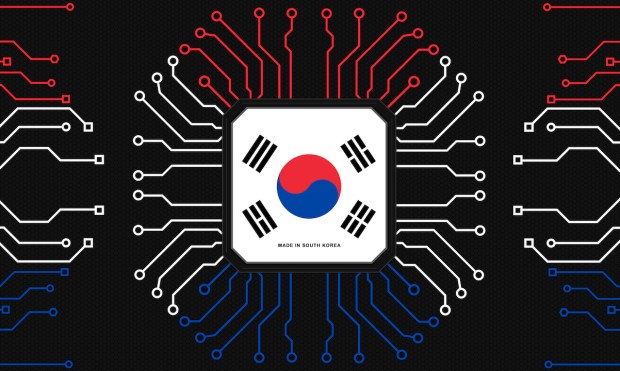
South Korea is becoming the first country to offer artificial intelligence (AI) as a public utility, providing all 52 million residents free, unlimited access to an AI chatbot, in the same way it already provides broadband and public education.
The Ministry of Science and ICT opened bidding on July 13 for the program, called the “AI for All Project,” (also translated as “AI for Everyone”), making South Korea the first G20 nation to make that commitment. A public beta of the general-purpose chatbot is planned for late September, with a full national launch targeted before the end of the year. “AI for All is more than just a service; it is the calculator and computer of the AI era,” Deputy Prime Minister and Science Minister Bae Kyung-hoon said at the launch.
AI for All has two phases. The first is a general-purpose chatbot, free with no usage limits, aimed at everyday questions and drafting tasks. The second is more structurally unusual: a proactive agent that reads a citizen’s circumstances, identifies which government benefits, scholarships or administrative programs they qualify for, notifies them in advance and completes the application paperwork on their behalf, Tech Times reported.
Starting in 2027, the Ministry of Science and ICT plans to advance the public service agent further, moving toward what officials describe as an era of one-agent-per-citizen model.
Free Service Comes With an 80% Domestic-Model Requirement
We’d love to be your preferred source for news.
Please add us to your preferred sources list so our news, data and interviews show up in your feed. Thanks!
The operators selected to run AI for All are required to route at least 50% of user queries through their own certified domestic Korean foundation model, as well as an additional 30% through models built by other South Korean companies. Combined, that puts the domestic-model floor at 80% of total usage. Foreign models are permitted only in a limited capacity, and any foreign-model usage falls outside the government’s cost support, meaning operators pay for it themselves, according to Pebblous’s analysis of the bidding rules. The government will select two or three private operators and supply them with a pooled base of 512 Nvidia B200 GPUs to run the initial service, UPI reported.
The 80% domestic-model requirement will prevent any single company from building the service entirely on its own models, forcing broader participation across South Korea’s domestic AI industry, a sector anchored by developers including Naver, LG AI Research, SK Telecom and Upstage.
The domestic-model requirement is workable because South Korea spent the past two years building the supply chain to support it. The country’s AI Basic Act took effect on Jan. 22, becoming the Asia-Pacific region’s first comprehensive AI law and creating the legal foundation for the government to actively promote AI access as a public benefit.
Only 1.8 million South Koreans currently pay for a commercial AI subscription, even though roughly 44.5%, or about 23 million people, already use generative AI regularly, The Next Web reported. The government’s own survey found a sharper divide beneath that number: 59.4% of the public had used AI, compared with just 31.9% of digitally vulnerable groups, UPI reported. Digitally vulnerable groups are the target population the public-service agent is specifically designed to reach first.
Other Governments Regulate AI, None Have Distributed It Yet
Governments across the globe have moved to shape AI through regulation, subsidy or national security review, but none have committed to providing the technology itself to an entire population.
If the AI for All program works, the South Korean model will give other governments a template that does not currently exist anywhere else: AI distributed like broadband, public education or a national identity system, and funded and standardized by the state rather than sold as a subscription.
For all PYMNTS AI coverage, subscribe to the daily AI Newsletter.


 Add as Preferred Source