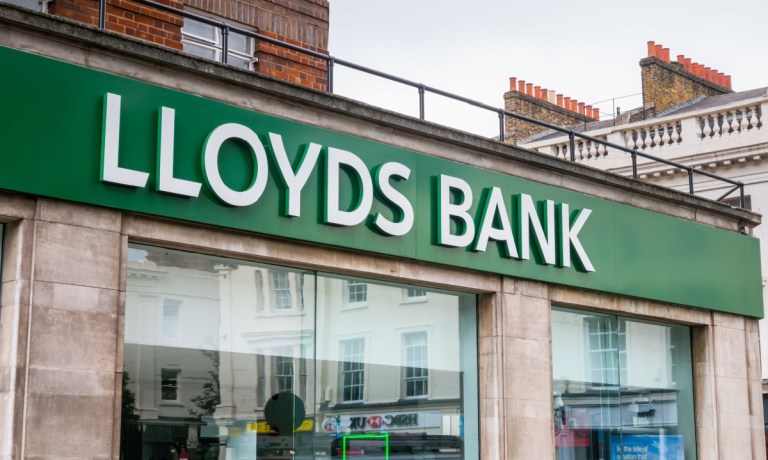
That’s according to the Financial Times (FT), which published an interview with Charlie Nunn on the topic Wednesday (Jan. 7).
Nunn, whose bank is the largest provider of home loans in the U.K., told the news outlet that he believes that “deposit tokenization,” or putting customer deposits on the blockchain, could transform how Lloyds’ 23 million digital customers use their bank accounts, comparing its potential for disruption to the advent of the smartphone.
“The moment you picked up your first smartphone it was incredibly intuitive and joined up,” said Nunn, interviewed at the Financial Times’ Global Banking Summit last month. “We think … in these next five years using these technologies could be that ‘wow moment’ where suddenly you realize it is more personalized, more intuitive and simpler.”
Mortgage lenders like Lloyds also hope that smart contracts can help cut out the various middle-men and account transfers that prolong the process of buying a home, which the FT says is notoriously slow in the U.K.
“Take mortgages: the whole conveyancing, document sharing, value exchange and payments process can be built into a smart contract, and the whole thing can be guided with or without a broker, with an agent giving advice to customers,” Nunn said.
Advertisement: Scroll to Continue
As the FT notes, Lloyds is not the only banking seeing potential in tokenization. Fellow British lenders Barclays, HSBC and NatWest took part in a pilot with the trade association UK Finance in September to start testing tokenized sterling deposits in transactions.
Citigroup in October credited tokenization for driving record quarterly revenues. That bank has also integrated Citi Token Services with 24/7 USD Clearing, allowing institutional clients to move tokenized deposits across jurisdictions in near-real time without having to exit established account, compliance and settlement frameworks.
And JPMorgan’s Kinexys platform has piloted a dollar-denominated deposit token operating on blockchain rails, backed by the bank’s balance sheet and governed by standard know-your customer (KYC) and risk controls.
“In each case, tokenized deposits are positioned as core infrastructure rather than speculative instruments,” PYMNTS CEO Karen Webster wrote recently.
“They support liquidity management, collateral mobility, programmable treasury operations and large-value settlement while mirroring existing account structures and legal protections,” Webster added. “For CFOs and treasurers, the permissioned nature of these systems is not a constraint. It is the feature. It maps cleanly onto how they already think about counterparties, risk tiers and control.”