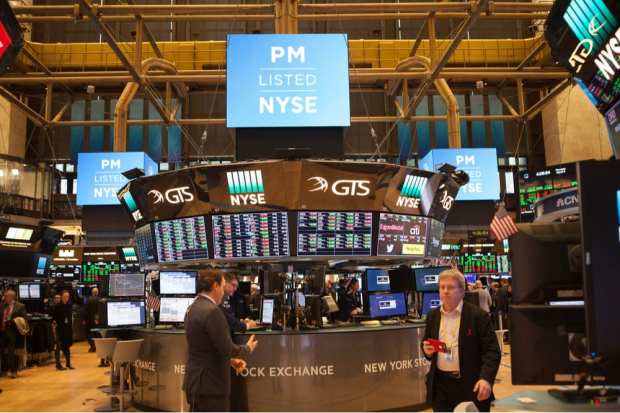
Backed by financial services conglomerate Ping An Group, the Shanghai-based startup has filed with the SEC to list on the New York Stock Exchange under the ticker “LU.”
We’d love to be your preferred source for news.
Please add us to your preferred sources list so our news, data and interviews show up in your feed. Thanks!
The filing indicates Lufax is marketing 175 million American depositary shares for $11.50 to $13.50 each.
Lufax revamped its business after Chinese authorities went after peer-to-peer (P2P) lenders. With the backing of Ping An, it is now in a better position for an IPO and showed a net profit for the six month period ending June 30 that topped $1 billion on total income of $3.64 billion, according to the filing.
Lufax is planning to use IPO proceeds in a variety of ways, including product development, technology infrastructure, capital expenditures, acquisitions and global expansions, according to a Bloomberg report on Thursday (Oct. 22).
The offering is expected to be priced on Oct. 29, the company said, and shares trading Oct. 30. The offer is being led by Goldman Sachs, Bank of America, UBS, HSBC, and China PA Securities.
Lufax is one of many Chinese companies rushing to file for an IPO ahead of the new federal disclosure laws. Real estate company KE Holdings and electric automobile maker XPeng filed in July. In 2019, IPOs by Chinese companies were estimated to be valued at $4 billion, according to Dealogic statistics.
U.S. Treasury Secretary Steven Mnuchin has said that by the end of 2021, Chinese firms seeking to be on any U.S. stock exchanges will be held to U.S. auditing principles. Under one of the standards, it would require that firms open their audit records to U.S. authorities, which would essentially be a violation of Chinese secrecy laws.


 Add as Preferred Source