With back-to-school season upon us, we took a look at the higher education side of the ledger. The silent drain of outdated payment systems in American higher education is costing universities far more than just missed tuition payments, impacting everything from staffing efficiency to institutional reputation.
A recent PYMNTS report, “Unified Commerce in Higher Ed Could Reduce Tuition Delinquency,” highlights how siloed, legacy payment systems continue to absorb valuable resources and obscure financial visibility within higher education institutions. Many colleges and universities still depend on fragmented, analog payment systems, which introduce inefficiencies that disrupt cash flow and diminish student satisfaction — factors critical to long-term institutional success.
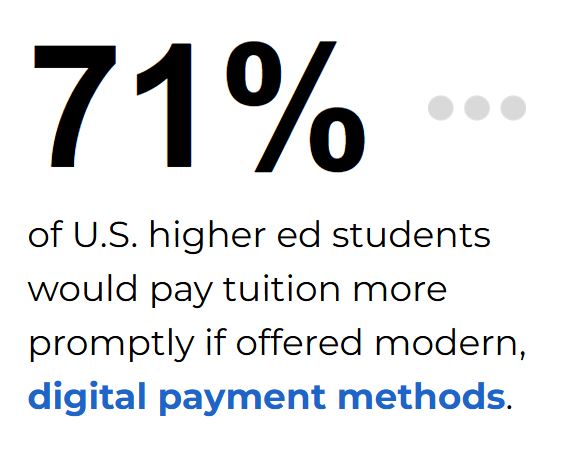
The report indicates these outdated systems are a key contributor to a significant resource crisis, noting that at the end of 2023, 72% of U.S. colleges and universities faced outstanding accounts receivable (AR) exceeding $1 million, with a third having overdue balances over $5 million. To counter these challenges, the report champions unified digital commerce systems as a next-generation alternative. These modern systems not only streamline financial processes but also deliver the convenient digital payment experiences that today’s students expect, ultimately enhancing an institution’s financial health and student success.
Unified commerce systems are proving indispensable for higher education institutions seeking improved financial management. Laura Newell-McLaughlin, executive vice president of Integrated Payments and Campus Commerce at Transact Campus, emphasizes that from an institution’s standpoint, such systems simplify the management of diverse payment types and volumes, providing enhanced efficiency and better data-driven insights crucial for future growth and student retention. Beyond institutional benefits, these systems provide a seamless, cohesive experience for students and their families by integrating all aspects of campus life, from tuition payments to meal plans, onto a single platform. This integration streamlines processes and minimizes friction by eliminating the need for multiple, disconnected transactions. Newell-McLaughlin concludes that unified commerce aims to create an integrated, unified experience that elevates the entire campus ecosystem, not just commerce.
Key data points from the report include:
- Human capital drain: Nearly three-quarters (74%) of U.S. higher education officials dedicate up to half their time to recovering delinquent tuition, with 42% assigning 10 or more staff to these manual, resource-intensive efforts, diverting personnel from core educational missions.
- Student stress factor: 3 in 4 undergraduates reported experiencing stress due to fragmented college payment experiences, identifying ambiguous payment processes (25%), a lack of convenient payment options (21%) and an overwhelming number of payment choices (14%) as primary stressors.
- Reputational impact: The report suggests payment experience is increasingly shaping students’ perceptions of an institution’s reputation, with 72% of students stating that the payment experience should be a key metric for ranking colleges and universities.
The PYMNTS Intelligence report also outlines a practical roadmap for higher education institutions to achieve this transformation, prescribing steps such as conducting comprehensive audits of existing payment processes to identify siloed systems and pain points, establishing cross-functional task forces to evaluate integrated solutions, and implementing phased rollouts. It recommends leveraging automated accounts receivable (AR) capabilities to optimize collection strategies through data analytics and customized outreach, which can significantly improve recovery rates while reducing manual burdens.
Advertisement: Scroll to Continue
The report also stresses the importance of partnering with trusted providers specializing in automated AR and unified commerce solutions to ensure a smooth transition, scalability, data security and compliance with industry standards. Ultimately, modernizing and unifying AR processes not only frees up scarce human capital and safeguards cash flow but also positions campuses to improve their finances and secure a top-ranking spot within the evolving student experience landscape. The shift toward a unified, digital financial future in higher education is presented as an essential step to empower students and strengthen institutions.