Cryptocurrency
EU Agreement on Crypto Regulation Limits Stablecoins, Leaves NFT, DeFi Out
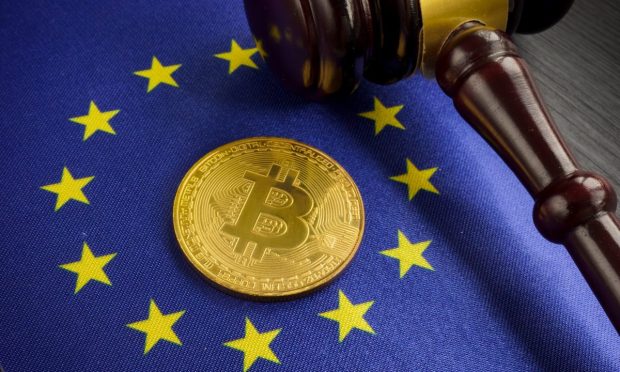
At the 11th hour, on Thursday June 30, the last day of the French presidency of the Council of the EU, members of the European Commission, the EU Parliament and the Member States reached an agreement on landmark legislation to regulate crypto assets and service providers: the Markets in Crypto Assets (MiCA) regulation.
EU Agrees on Strong AML Checks for Crypto With an Exemption for Unhosted Wallets
EU policymakers agreed on new anti-money laundering (AML) rules for crypto transactions on Wednesday, June 29. The agreement contemplates that for transactions between digital wallet providers, like crypto exchanges, the parties will need to verify customer identities even for the smallest crypto transfer.
However, lawmakers decided to leave most small payments or transfers to unhosted private wallets out of laundering checks, a departure from the original proposal. Payments to unhosted wallets over 1,000 euros will still need to be reported, in line with similar provisions applicable for transfers in traditional banking.
French Lawmaker Criticizes Binance Approval
A French lawmaker is urging the country’s market regulator to reconsider its “incomprehensible” decision last month to OK the cryptocurrency exchange Binance.
Aurore Lalucq, French MEP and member of the European parliament’s Committee on Economic and Monetary Affairs, wants the Autorité des Marchés Financiers (AMF) to review its ruling, which she said gave Binance a “guarantee of respectability.”
EU Reportedly Proposing Ban on Stablecoin Deposit Interest
The European Union will look into banning crypto platforms from charging interest on stablecoin deposits, said tweets from Patrick Hansen, head of strategy at Unstoppable Finance, a decentralized finance (DeFi) firm.
He said lawmakers will be looking into high regulatory requirements for issuers of any stablecoins, without exceptions for algorithmic stablecoins.
Payments
EBA Recommends a Standard API for Open Banking in New PSD3
The European Banking Authority (EBA) published on Thursday, June 23 an opinion in response to the European Commission’s call for advice on the upcoming review of the Payment Services Directive (PDS2). The opinion, far from being a mere reply to fulfil its statutory duties, contains more than 200 proposals.
Perhaps the most innovative yet challenging proposal from the EBA is about how to foster the implementation of open banking and open finance provisions. The banking regulator is asking the Commission to explore the possibility of having a common application programming interface (API) standard across the EU to be developed by the industry.
We’d love to be your preferred source for news.
Please add us to your preferred sources list so our news, data and interviews show up in your feed. Thanks!
Authorized Push Payment Fraud Reaches ‘Epidemic’ Levels in UK
The U.K. is experiencing a widespread “epidemic” of payments fraud, in which scammers trick victims into sending money into fraudsters’ accounts, the Financial Times reported Wednesday (June 29).
The report says there was a 40% increase in 2021 in this type of scam, which is called authorized push payment fraud. This shows how criminals have been monetizing the pandemic, as people have shifted more to digital payments.
The report notes that there has been around 1.3 billion pounds ($1.6 billion) in losses to fraud overall last year, a rise from 1.2 billion pounds ($1.4 billion) in 2020. Some 580 million pounds ($697 million) in 2021 was authorized push payment fraud, according to a report from UK Finance, a trade organization for the financial services industry.
UK Seeks Guidance on New Open Banking Roadmap, Regulator
Last week, on June 24, the U.K. Financial Conduct Authority (FCA) and the Payment Systems Regulator (PSR) issued two different statements about the future of open banking and the role that the Joint Regulatory Oversight Committee will play in this endeavor. Interestingly, both regulators called on stakeholders, including the private sector, to join a strategic working group (SWG) that will assist the Joint Committee in designing the regulatory roadmap for open banking and account-to-account payments.
Big Tech
EU Lawmakers Rush to Pass Online Platform Bills in Next Week’s Plenary Vote
The European Parliament will hold the last plenary session before the summer recess from July 4 to July 7, and lawmakers are rushing to get all the legal texts ready for a vote. The Digital Markets Act (DMA) and the Digital Services Act (DSA) may receive formal approval by the plenary of the EU Parliament. This would mean that these two legal texts would surpass the last procedural hurdle in Parliament: they would be sent to the EU Council and then published in the EU Official Journal.
Apple Enables Third-Party Payments in South Korea in Response to New Law
Apple is now allowing third-party payments in South Korea in response to a new law requiring major app stores to allow alternative payment methods, according to multiple reports on Thursday (June 30). While Apple will still get a commission, it will be 26% instead of the 30% it reaped from direct payments. In its documentation to developers, Apple said all sales will have to be reported monthly and commissions paid accordingly.


 Add as Preferred Source