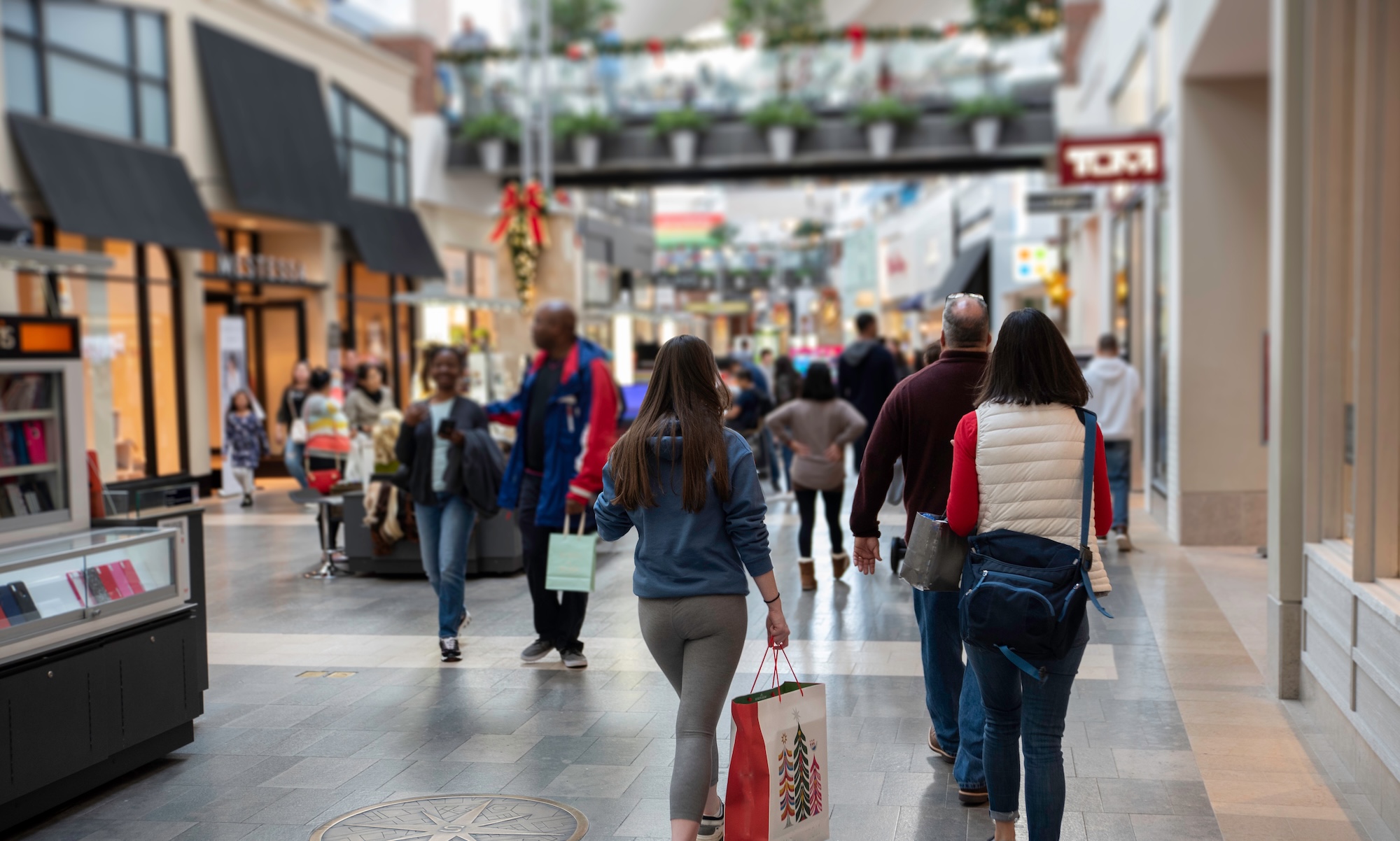
The American mall will reportedly play a starring role in many consumers’ Thanksgiving weekend shopping plans.
That’s according to a report Tuesday (Nov. 24) from Reuters, which says brands are offering in-store deals and revamping their stores and consumers are drawn to malls by restaurants, entertainment and “shared experiences.”
Around 84% of Americans who plan to shop over Thanksgiving weekend expect to do so in a brick-and-mortar store, the report said, citing data from the International Council of Shopping Centers. That’s the highest share since 2019.
Meanwhile, roughly 55% of U.S. holiday shoppers plan to visit an indoor mall this season, compared to around 50% last year, Reuters added, citing a survey of consumers by real estate investment company JLL.
Consumers are “gravitating towards malls because of the depth and breadth of opportunities to shop,” said Paul Chase, president of lifestyle property management at JLL. “It’s important to customers or shoppers that they’re going to go where they get … the best experience.”
PYMNTS wrote earlier this year that while malls are seeing an uptick in sales and traffic, that resurgence has hit all shopping centers.
“Walk into a top-tier mall in a high-income suburb right now and you can still feel echoes of the holiday rush: full parking decks, busy food halls and steady lines at the ‘can’t-get-it-online’ stores,” that report said.
“Drive 20 minutes in the other direction and you may find an enclosed mall that feels more like a stranded asset, with dark corridors, empty anchor boxes and ‘for lease’ signs that have become part of the décor. The post-holiday verdict is not that malls are back or dead. It is that the U.S. mall sector has split into two distinct property types, and the performance gap is widening.”
More recently, PYMNTS wrote that major retailers are heading into the holidays season — and facing an uncertain macro environment — are courting customers who shop more often, rather than those who spend more.
Recent earnings results from Target and Walmart indicate larger retailers are uncovering ways to boost sales without depending entirely on consumers spending more per transaction, that report said. But the shift could lead to a mismatch between how retailers generate revenue and what it costs to capture it.
“More transactions can mean more store visits, stronger customer relationships and greater market share,” PYMNTS wrote. “They can also mean more orders to pick, more deliveries to coordinate and more promotional spending to persuade consumers to return. That tension is becoming more important as retailers head into the holidays.”