“We had a coffee house that used it for line busting,” Barrotti recalled. “They had a line 20 minutes out the door, and the owner literally picked up the single iPad and just walked down the line and took orders while people waited for their coffees to be made. That really took off when the iPad mini came into existence.”
The technology has become almost essential in Toronto, the company’s hometown. Barrotti said that roughly half of the new restaurants opening in the city are using TouchBistro to accept and process payments.
“The appetite and the speed with which people are either switching or adopting has become really amazing,” he said. While in the past it was just a curiosity, he said, “there are streets where we have 50 different restaurants.”
That success is attracting interest from multiple industries. Now, full service payments were no longer seen as another modern fad or passing trend.
“It’s gone from a curiosity to a full-fledged movement,” Barrotti said, noting that similar tablet-based solutions are popping up in numerous different industries. “Look at the airport; there are kiosks absolutely everywhere that are just iPads that can accept payments. Even Apple is realizing that POS movement has become a major source for their sales of the iPad.”
And it seems to just be getting started. Barrotti said that since October’s EMV shift in the U.S., 60 to 70 percent of the company’s customers come from the U.S., up from just 40 percent prior to the shift.
So, what should full service payment industry observers look for from QSRs in the coming months? What trends will the early adopters take up, advancing the industry even further?
Barrotti said to look toward loyalty programs. Many QSRs still do not have a loyalty or rewards program, he said, and are looking to find an easy way to start one.
“What we’re getting a lot of demand for is just a straight loyalty app, one where people would not have to carry cards around,” he noted. “They’re just looking for a digital replacement to the stamp card you get at a coffee shop or a bubble tea shop, where you can get your tenth one free. A lot of people have been asking us for a straight loyalty check in so I can say, OK, I’ve been here 10 times, I’d like my free coffee.”
Barrotti also said he believes a day will come soon where paying for a purchase is as simple as answering your phone.
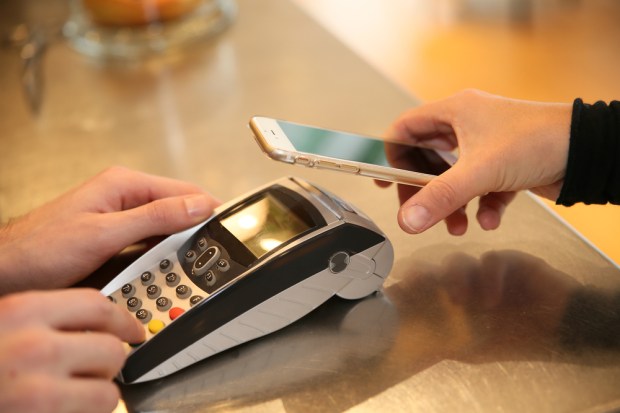
“I keep saying this, but I would love for them to do away with the third-party device,” he said, picturing a day when items like credit cards are a thing of the past. “I think the holy grail is when I can tap my phone to an iPad and initiate payment.”
Those days may not be far off.
“I think we’re halfway there,” Barrotti said. “You can tap your phone to the terminal and, in fact, some of the iPads even ship with an NFC antenna, but they are in transmit instead of receive mode. When I can tap my phone and make payment, without having to have the third-party device in the middle, I think that is going to be fantastic.”
To download the April edition of the Payments as a Service Tracker™ click the button below.
The PYMNTS.com Payments as a Service Tracker™, in collaboration with Cayan, is designed to give an overview of the trends and activities of merchant platforms that not only enable payment processing of new and old technologies, but also integrate with other features to improve the merchant’s experience, including customer engagement, security, omnichannel retail experience, analytics, inventory management, software and hardware management, and more.