Main Street businesses are losing momentum, but planned and recurring services are still finding room to grow.
The latest PYMNTS Intelligence Main Street Health Index, “Why Main Street Is Splitting: The Data Behind Small Business Winners and Losers,” found that Main Street growth slowed to less than 1% between September 2024 and September 2025 and now trails businesses in the United States overall for the first time in recent memory. Main Street employment slipped slightly, weighed down by restaurants and retail.
 Yet the report also showed that wages rose nearly 3%, and consumers are still spending on services tied to health, home improvement and recurring routines.
The divide is important for banks, payments companies and FinTechs serving small businesses. Main Street is not one market moving in one direction. It looks more like a neighborhood where some storefronts are struggling with foot traffic while others still have appointments booked, memberships renewing and projects scheduled.
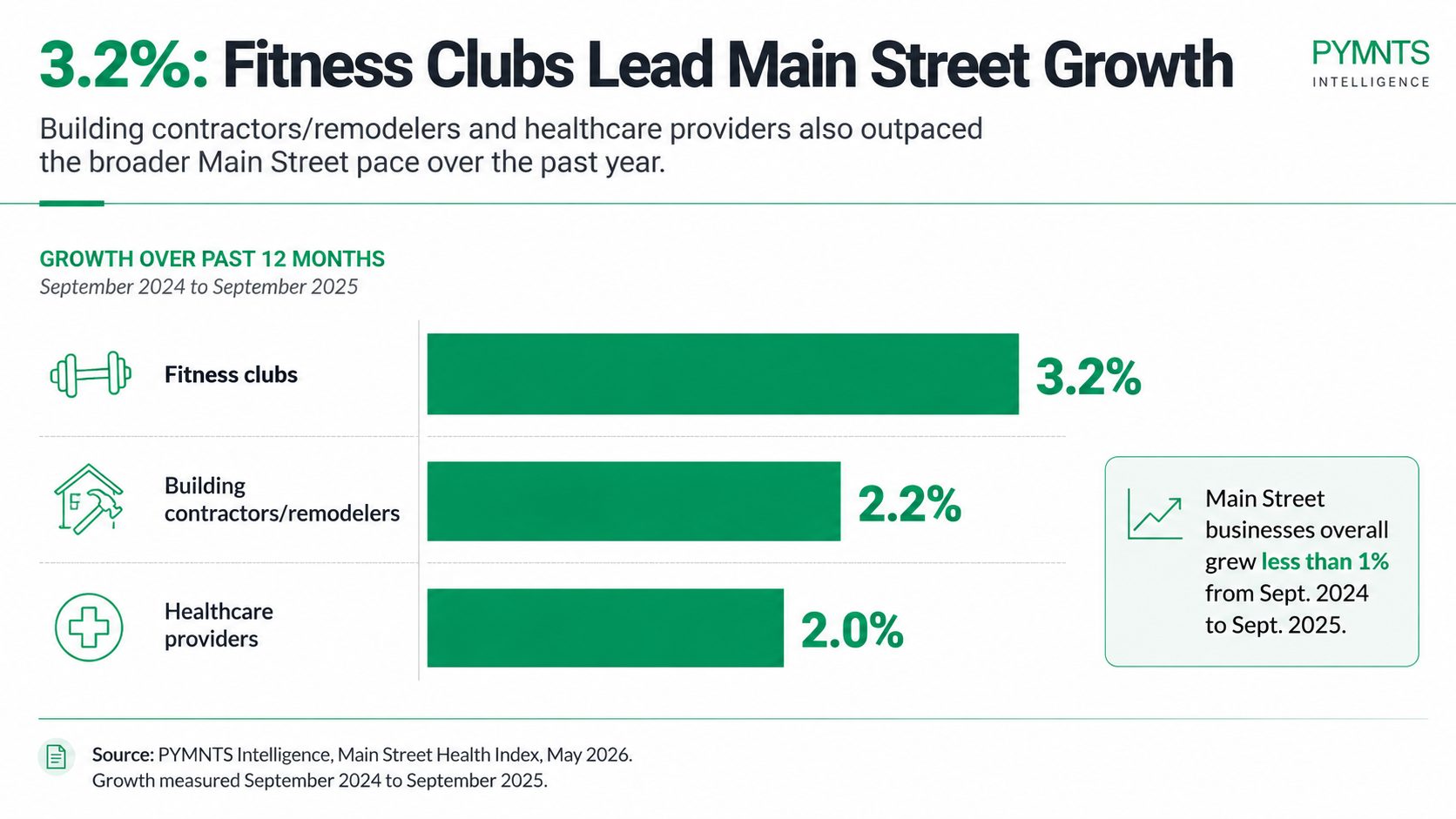
Three data points show where the momentum is strongest:
We’d love to be your preferred source for news.
Please add us to your preferred sources list so our news, data and interviews show up in your feed. Thanks!
- Fitness and recreational sports clubs grew 3.2% in the 12 months through September, the strongest gain of any Main Street segment tracked in the index.
- Building contractors and remodelers grew 2.2%, suggesting that consumers are still funding planned home projects even as spending in more discretionary categories softens.
- Healthcare providers grew 2%, reflecting demand for services consumers are less likely to delay or replace with cheaper alternatives.
These categories share a practical advantage. Many of their sales come from commitments consumers plan. Gym memberships recur. Home renovation and repair projects often involve deposits, invoices and staged payments. Medical visits are scheduled. That makes these businesses different from restaurants and retailers, where spending can change quickly when households feel pressure.
For financial institutions and payments providers, that difference creates opportunity. Small businesses in growing service categories may need tools that help manage recurring payments, card acceptance, invoicing, financing and cash flow visibility.
Fitness operators may need stronger subscription management. Contractors may need easier ways to collect deposits and progress payments. Healthcare providers may need more flexible ways to collect patient balances without adding friction.
The broader report still showed a constrained Main Street economy. Restaurants and bars contracted 2.4% over the year, while retail fell 2%. Main Street employment declined 0.3%, its first drop outside the pandemic years. The Northeast also contracted for a second consecutive edition of the index, while five other regions posted gains.
Still, the picture is not simply negative. Main Street remains 36% above its 2007 baseline, compared with 25% for all U.S. businesses. The sector has lost some momentum, but it has not lost its capacity to adapt.
The next phase may favor small businesses that sell services consumers treat less like impulse purchases and more like parts of daily life.
At PYMNTS Intelligence, we work with businesses to uncover insights that fuel intelligent, data-driven discussions on changing customer expectations, a more connected economy and the strategic shifts necessary to achieve outcomes. With rigorous research methodologies and unwavering commitment to objective quality, we offer trusted data to grow your business. As our partner, you’ll have access to our diverse team of PhDs, researchers, data analysts, number crunchers, subject matter veterans and editorial experts.



 Add as Preferred Source