Today In Data: What The Start Of The ‘Smart’ World Means

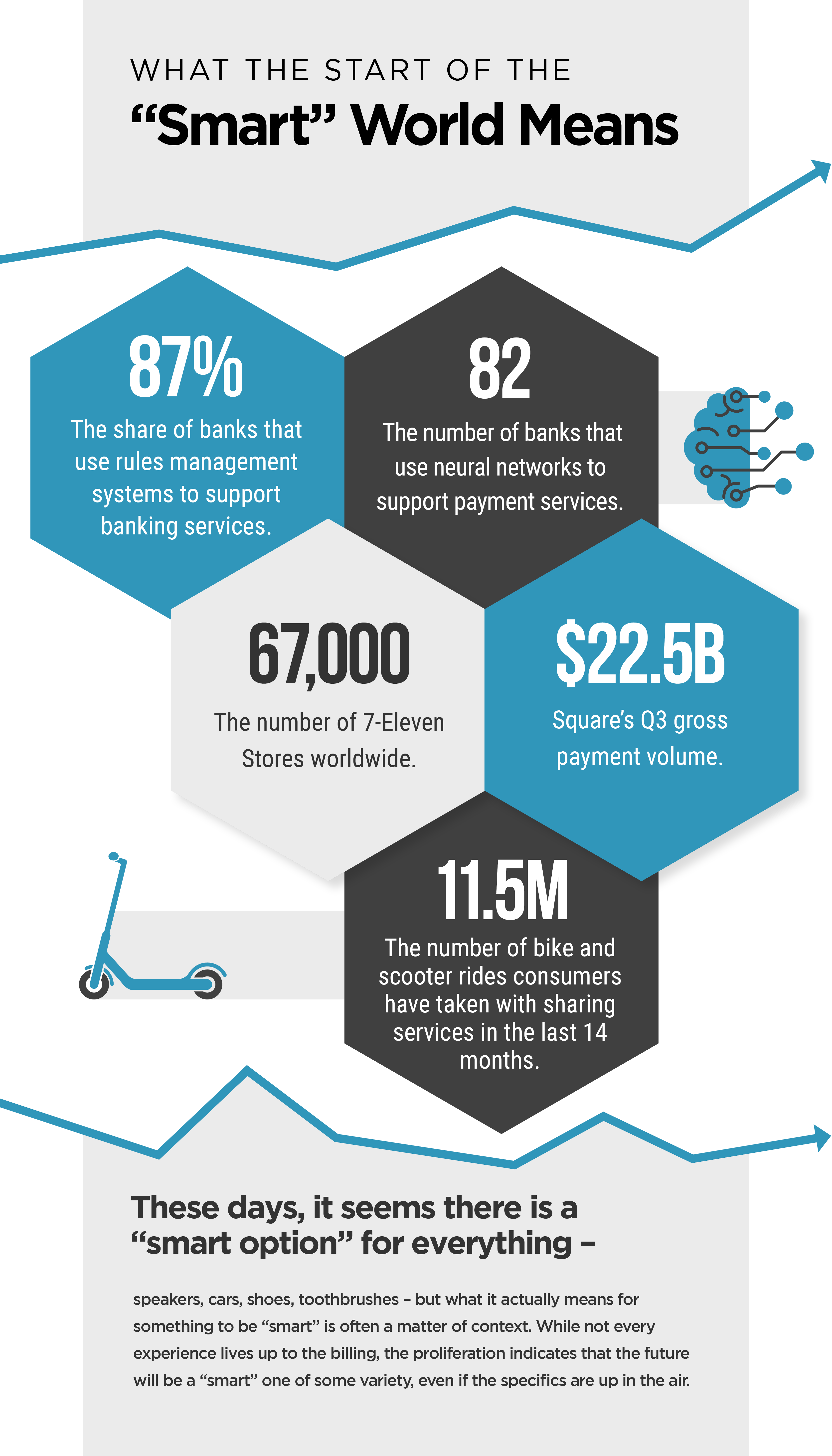
There is no shortage of things in the world claiming to be “smart,” though what that actually means varies in context. It might mean connecting something that historically hasn’t been, and opening it up to new cases by so doing. It might mean investments into artificial intelligence, and building out the next generation of software that can not only learn, but also learn what to learn. It might mean reshaping common experiences, so that everyday interactions, like hitting a convenience store, are digitized, automated and digital payments-equipped. Not every experience billed as smart actually is, of course – some are pretty dumb, according to reviews – but the expanding proliferation indicates that “smart” is the shape of things to come in an awful lot of places.
    Get the Full Story

    Complete the form to unlock this article and enjoy unlimited free access to all PYMNTS content — no additional logins required.

    yesSubscribe to our daily newsletter, PYMNTS Today.

    By completing this form, you agree to receive marketing communications from PYMNTS and to the sharing of your information with our sponsor, if applicable, in accordance with our Privacy Policy and Terms and Conditions.

    Data:

    $22.5 billion: Square’s Q3 gross payment volume.

    11.5 million: The number of bike and scooter rides consumers have taken with sharing services in the last 14 months.

    67,000: The number of 7-Eleven Stores worldwide.

    87 percent: The amount of banks that use rules management systems to support banking services.

    Advertisement: Scroll to Continue

    82: The amount of banks that use neural networks to support payment services.