Emerging Innovation And Fraud Trends In Consumer Commerce

cybersecurity

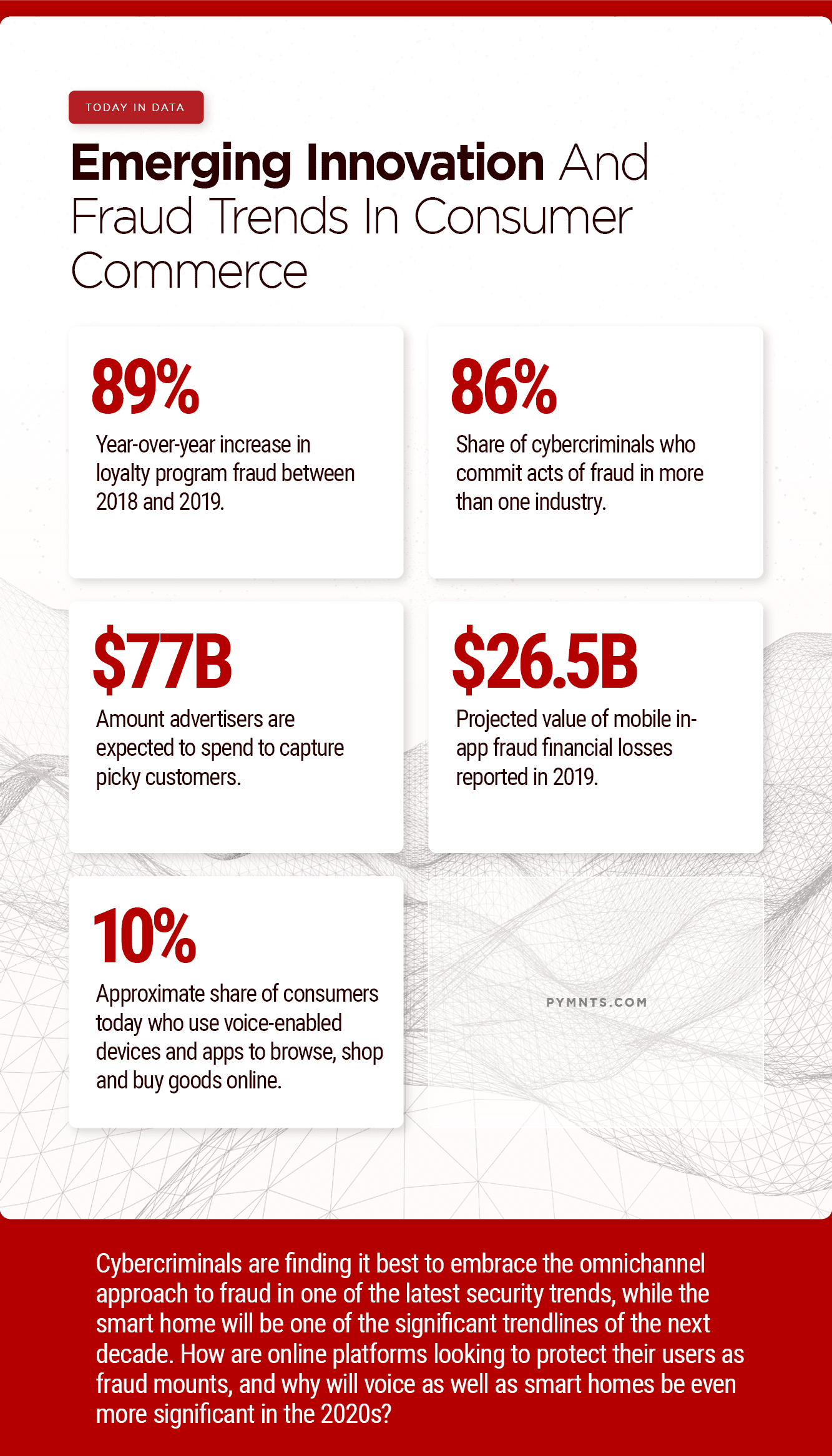
Cybercriminals are finding it best to approach fraud with an omnichannel strategy, which involves hitting every customer service channel for best results. At the same time, however, online platforms are aiming to protect their users as fraud mounts. And, in retail, the so-called smart home — powered in large part by voice-assisted retail and payments — will be one of the primary trendlines of the 2020s. All this, Today in Data.

    Get the Full Story

    Complete the form to unlock this article and enjoy unlimited free access to all PYMNTS content — no additional logins required.

    yesSubscribe to our daily newsletter, PYMNTS Today.

    By completing this form, you agree to receive marketing communications from PYMNTS and to the sharing of your information with our sponsor, if applicable, in accordance with our Privacy Policy and Terms and Conditions.

    Today in Data

    Data: 

    89 percent: Year-over-year increase in loyalty program fraud between 2018 and 2019.
    86 percent:
     Share of cybercriminals who commit acts of fraud in more than one industry.
    $77 billion:
     Amount advertisers are expected to spend to capture picky customers.
    $26.5 billion:
     Projected value of mobile in-app fraud financial losses reported in 2019.
    10 percent:
     Approximate share of consumers today who use voice-enabled devices and apps to browse, shop and buy goods online.