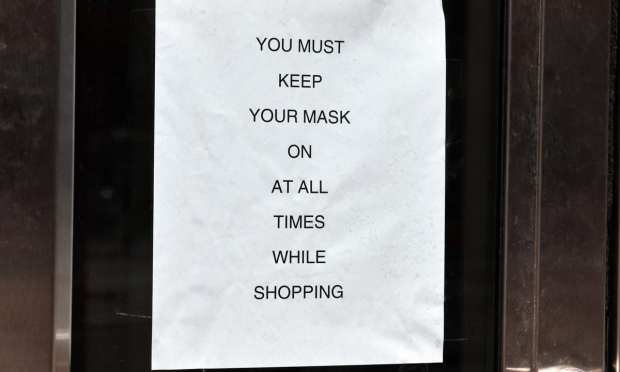
Some shop owners in states that never required masks, even at the pandemic’s peak, took matters into their own hands and required customers to wear face coverings.
We’d love to be your preferred source for news.
Please add us to your preferred sources list so our news, data and interviews show up in your feed. Thanks!
By way of example, Texas Gov. Greg Abbott dropped the state’s mask mandate on March 2; however, Soul Popped Gourmet Popcorn at Austin’s Barton Creek Square Mall still requires customers entering the store to wear a mask. Owner De J. Lozada said it’s just a matter of safety for everyone. “We cannot afford to take chances with the lives of my staffers. They’re young people and their parents have entrusted me with their care,” Lozada told the AP.
Since a company’s premises are considered private property, the owners have the freedom to set requirements for entry, similar to how restaurants can insist customers wear shirts and shoes, said Michael Jones, an attorney with the law firm Eckert Seamans in Philadelphia, per the AP. “Storeowners, business owners have the absolute right to require customers, vendors, anyone who comes onto their property to wear a mask,” Jones said. It’s legal as long as owners don’t have rules that are considered discriminatory, he added.
The majority of retail franchises are also keeping the mask mandate in place for employees and customers. Foot Locker is one exception — its stores will follow the state-side rules. Federal law requires that employers provide a safe work environment, which can include requiring masks.
The world started reopening in mid-March as vaccinations became more widely distributed and coronavirus cases started dwindling. Israel, for instance, reopened most of its economy and started dropping lockdown restrictions. In the U.S., Texas, Maryland, Mississippi, Connecticut, Arizona, West Virginia and Wyoming dropped capacity limits on restaurants and other businesses.
PYMNTS’ Digital 3.0 FIT platform concluded that all businesses — and retailers in particular — would be wise to strategize for the short term, while watching for which consumer behaviors will continue post-pandemic.


 Add as Preferred Source