Consumers are increasingly embracing the immediacy and transparency offered by real-time payments. And the migration to ISO 20022, a new global standard for secure and efficient messaging between financial institutions (FIs), is expected to further accelerate this trend.
When it comes to benefits, real-time payments offer more than just speedy transactions. They provide a modern, secure payment method with instant settlement, guaranteed immediate access to funds, and confirmation through account balance updates.
We’d love to be your preferred source for news.
Please add us to your preferred sources list so our news, data and interviews show up in your feed. Thanks!
In “ISO 20022 Implementation Highlights Real-Time Payments’ Value,” PYMNTS Intelligence draws on insights from multiple proprietary research studies of consumers and executives to examine the evolving real-time payments preferences and expectations.
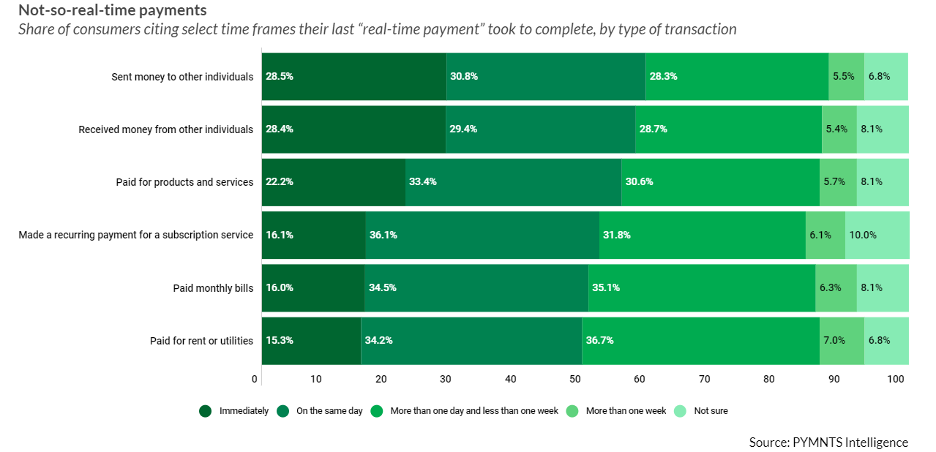
According to findings detailed in the study done jointly by PYMNTS and ACI Worldwide, consumers are incorporating real-time payments into various aspects of their financial activities, including routine bill payments. In fact, 31% of bill-payers consider real-time payments important for tracking, reviewing or paying monthly bills.
However, there is a lack of clarity among consumers regarding what constitutes a real-time payment. Only 29% of consumers who claimed to have made real-time payments believed that the payment cleared immediately. Additionally, 28% of consumers reported that it took over a day for their “real-time payment” to be processed, while nearly 6% said it took more than a week. When it came to those making monthly bill or subscription fee payments, only 16% believed their real-time payments were processed instantly.
While this gap in understanding poses a challenge, the growing demand for immediacy and transparency in transactions is a clear signal to businesses to catch up or risk missing out. However, only 36% of executives overseeing consumer collections at large firms recognize the importance of real-time payments, indicating a slow response from key sectors in meeting consumer expectations.
Examining the data further shows that while 72% of FinTechs have already implemented real-time payments, credit unions (CUs) have been more cautious, with only 22% offering this payment method. This discrepancy highlights the potential challenges CUs may encounter in keeping pace with shifting consumer preferences.



 Add as Preferred Source