Quick-service restaurants have been among the most aggressive corporate adopters of artificial intelligence (AI), deploying the technology as an operational tool to defend margins in one of the most cost-compressed sectors of the economy.
Roughly 70% of restaurant operators are either actively using or piloting AI to improve loyalty programs and employee workflows, and 8 in 10 restaurant executives say they plan to increase AI spending in the next fiscal year, according to Deloitte.
The push comes as restaurant operators face mounting financial pressure. The industry is facing declining sales and lower traffic across many chains, making efficiency investments a strategic priority.
Large restaurant brands are now applying AI across ordering, marketing, supply chain management and labor planning as they search for ways to run thousands of locations with greater operational precision.
From the Drive-Thru to the Back of House
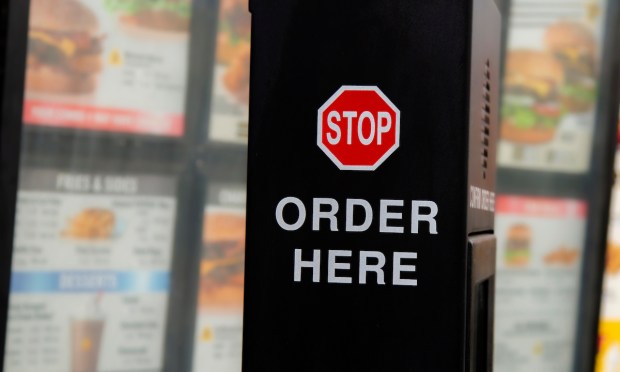
The most visible AI deployment in quick-service restaurants has been at the drive-thru window, where voice systems are beginning to handle customer orders.
Yum! Brands has processed more than 2 million drive-thru orders through its AI voice ordering system across more than 300 Taco Bell locations in the United States. The company is expanding the technology as part of a broader collaboration with Nvidia to integrate AI tools across restaurant operations.
The systems include voice-automated agents that take drive-thru and call center orders, computer vision software that monitors drive-thru traffic and kitchen activity, and analytics tools that assess restaurant performance and generate operational recommendations for managers.
For many chains, the drive-thru is only the entry point for a much broader operational overhaul.
Pizza Hut uses the Byte by Yum kitchen platform, a proprietary restaurant operating system that connects ordering, kitchen display, delivery and payments system to track and manage orders as they move through the restaurant, allowing staff to reduce delivery wait times and give customers real-time updates on order status. The platform aggregates data from restaurant systems and applies analytics to identify operational bottlenecks.
We’d love to be your preferred source for news.
Please add us to your preferred sources list so our news, data and interviews show up in your feed. Thanks!
Chipotle is deploying similar technology inside the kitchen. The company is testing a system developed with PreciTaste that uses AI and machine learning to forecast demand and manage ingredient preparation. The software analyzes historical sales data, customer traffic patterns and other operational signals to predict demand and generate alerts telling staff how much of each ingredient to prepare and when to begin cooking.
Automation is also extending into food preparation. Chipotle has developed a robotic system known as Autocado that automates the process of cutting, coring and peeling avocados. Preparing avocados can account for as much as half of the time required to make guacamole. The robot uses machine learning to recognize variations in avocado size and shape and adjust its mechanisms automatically.
These technologies allow restaurant operators to redirect labor toward customer-facing tasks while reducing preparation time and food waste.
A Move Toward Agentic Management
The next stage of AI adoption in restaurants is shifting from task automation toward operational decision-making.
Yum Brands has introduced an AI-driven management system under its Byte platform called the Byte AI Restaurant Coach. The system is designed to support store managers by analyzing operational data and recommending decisions related to staffing, scheduling and restaurant performance.
The system can track employee attendance, help plan shift patterns, recommend operational adjustments and assist with drive-thru management. It has been deployed across more than 28,000 restaurants within the Yum system and is expected to expand with additional capabilities that analyze customer feedback and store performance data.
A more advanced version of the model is emerging in China.
Yum China introduced an AI assistant known as Q-Smart that allows restaurant managers to control operations through voice commands delivered through wireless earphones and smartwatches. The assistant supports labor scheduling, inventory management and food safety inspections, allowing managers to interact with restaurant systems while working on the floor.
For all PYMNTS AI and digital transformation coverage, subscribe to the daily AI and Digital Transformation Newsletters.


 Add as Preferred Source