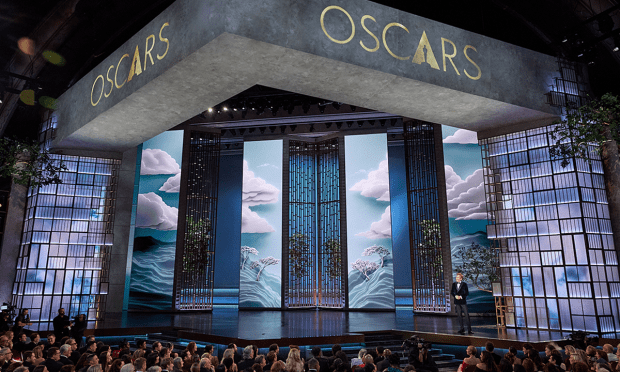
When Conan O’Brien took the stage at the 98th Academy Awards on Sunday (March 15), his opening line landed as both a joke and a warning.
“I am honored to be the last human host of the Academy Awards,” he said, adding that next year’s host would be “a Waymo in a tux.”
The quip drew laughs from those at the Dolby Theatre, but also reflected reality. Artificial intelligence is now being actively deployed in Hollywood studios, and the pace of change is outstripping the ability to establish clear rules. The question is no longer if AI will transform filmmaking, but how much, how fast, and on whose terms.
AI Is Already on the Lot
AI is used across the industry at many production stages, from concept art generation and script coverage to VFX pipeline work and post-production editing. Google, Runway and ByteDance have all released new AI video models in 2026, aiming to accelerate a market in which creators can use AI tools to produce entertainment content at a fraction of traditional cost and time.
According to The Conversation, AI systems are increasingly used to “assist with visual effects, editing and script analysis,” helping filmmakers manage complex production pipelines and experiment with new creative techniques. Generative AI can produce storyboards, concept images and preliminary visual environments before cameras begin rolling.
Major entertainment companies are also beginning to invest directly in AI filmmaking technologies. As reported by PYMNTS, Netflix recently acquired InterPositive, an AI filmmaking company founded by Ben Affleck that develops tools to support post-production tasks such as editing and visual effects adjustments.
Technology companies are also forming partnerships with studios to expand generative video capabilities. OpenAI recently announced a partnership with Disney that will allow the studio’s characters and intellectual property to be used within its Sora video generation platform, highlighting a licensing model that could allow media companies to participate in the development of generative video tools.
Copyright and the Limits of Generative Video
Not every AI video model has found its footing so gracefully. Concerns over copyright have intensified as generative video models become capable of producing realistic footage that resembles existing actors and film scenes.
One recent example involves ByteDance’s Seedance 2.0 video generation system. The company launched the model in China earlier this year, where short AI-generated clips quickly went viral online. Some of those clips reportedly included fabricated scenes showing actors such as Tom Cruise and Brad Pitt in a fictional fight sequence, drawing criticism from Hollywood studios. As reported by TechCrunch, the clips sparked immediate backlash across the film industry.
We’d love to be your preferred source for news.
Please add us to your preferred sources list so our news, data and interviews show up in your feed. Thanks!
Studios responded by sending ByteDance a series of cease-and-desist letters, with lawyers representing Disney accusing the company of a “virtual smash-and-grab of Disney’s IP,” as reported by TechCrunch. The backlash ultimately forced ByteDance to pause its planned global rollout of the Seedance 2.0 model while engineers and legal teams work to implement stronger intellectual property safeguards.
The copyright issue extends beyond a single model. Industry groups argue that generative video systems capable of producing photorealistic scenes may be trained on copyrighted film and television content without licensing agreements or compensation.
Unions Dig In as Studios Adopt AI
The labor side of Hollywood’s AI debate remains unresolved as studios experiment with new technologies while unions push for stronger protections.
SAG-AFTRA began formal negotiations with the Alliance of Motion Picture and Television Producers in February 2026, with AI safeguards among the central issues. As reported by Axios, the two sides agreed to a one-week extension of talks on March 6, signaling cautious optimism even as tensions rise ahead of the union’s contract expiration on June 30.
Among the union’s proposals is a “Tilly tax,” which would require studios to pay royalty fees whenever AI-generated performers appear in productions, a mechanism intended to make synthetic actors financially comparable to hiring real performers.
What Comes After the Screen
While studios and unions negotiate AI rules, an ongoing debate centers on how AI could fundamentally alter the entertainment landscape.
Alexis Ohanian, Reddit co-founder and venture capitalist, believes that the rise of AI-generated content could shift audience preferences toward live experiences that showcase human performance. In a post on X, Ohanian argued that AI will significantly alter Hollywood and acting, prompting a shift toward in-person storytelling and immersive events as audiences seek more authentic human connections.
For all PYMNTS AI coverage, subscribe to the daily AI Newsletter.


 Add as Preferred Source