Consumers won’t hand artificial intelligence agents unrestricted purchasing authority on day one, but repeated successful transactions could expand what they’re willing to delegate.
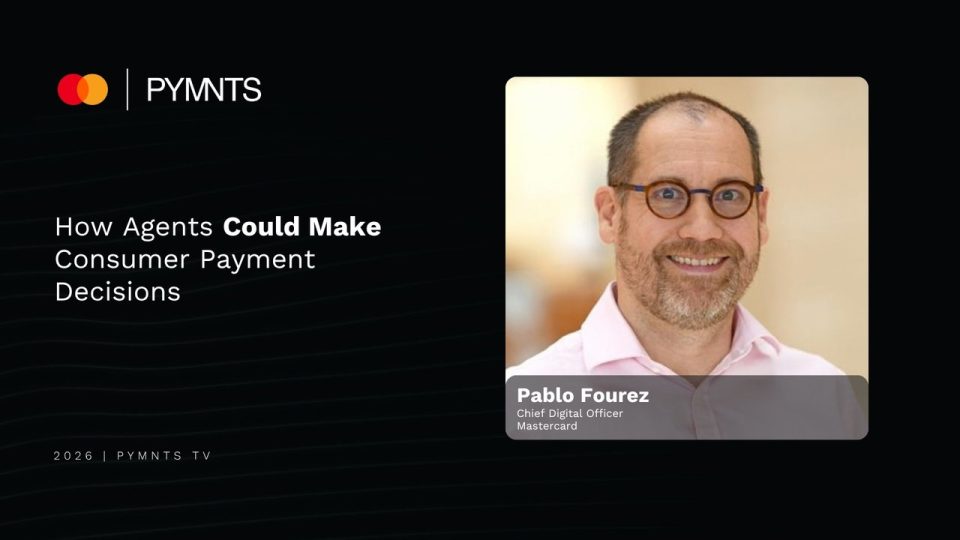
It’s a topic that now dominates agentic AI discussions. The first time Mastercard Chief Digital Officer Pablo Fourez lets an AI agent buy an airline ticket, he told PYMNTS CEO Karen Webster, he wants to check its work. If the agent gets the fare, refund terms and seat right, and keeps getting them right, he sees less reason to keep checking. A lot depends on the transaction itself, or the use case.
“There’s going to be a gradual consumer adoption,” Fourez said. “Initially, you may ask [the agent] to confirm the purchase before it executes it. And you might try that a couple of times. And then you might say, ‘Oh, this is actually working.’”
The amount of authority consumers grant an agent will also depend on what they’re buying.
Fourez used his own purchases to draw the boundaries. He said he likes Paul Smith striped socks and knows the product well enough that he would be comfortable letting an agent buy them. His weekly grocery order also contains many of the same products, allowing an agent to learn his preferred brands. It could take recipes he wants to cook, assemble the ingredients and order them.
“I might not immediately get them to select the wine,” he said. “I might want to have a point of view on that.”
Webster said she sees a similar progression toward delegation.
“I think it’ll be up to the consumer,” she said.
What begins as authority over the purchase could eventually extend to other personalization capabilities, including asking an agent to evaluate the offers and benefits available across different retailers and payment methods, enabling consumers to make more informed decisions on where and how they shop.
We’d love to be your preferred source for news.
Please add us to your preferred sources list so our news, data and interviews show up in your feed. Thanks!
The Merchant Readiness Imperative
As consumers gradually grow more comfortable delegating decisions to AI agents, merchants will face the parallel challenge of preparing their products, experiences and payment infrastructure to keep up.
Fourez described agentic commerce as a new channel for commerce, drawing a comparison with the move from desktop to mobile. That transition forced merchants to redesign how consumers reached them and required payment providers to change how transactions worked on a phone.
Merchants will need to consider how agents discover what they sell, Fourez said. Catalogs, prices and current inventory must be available in a form that lets an agent find the product, evaluate the offer and present it to the shopper.
The consumer, merchant and payment credential are three parts of the framework that Fourez and Webster discussed. The fourth is the ecosystem connecting them.
That requires establishing who is involved in an agent-led transaction, Fourez said. The payments system needs to be able to connect the identity of the consumer with the agent acting for that person and the merchant receiving the order. The consumer needs confidence that the agent is carrying out the instruction given to it, while the merchant and financial providers need confidence in the transaction they’re being asked to fulfill and process.
Agentic commerce creates another interface. This time, the customer reaching the merchant or payment provider may be software acting under authority granted by a consumer.
The parameters of that authority will ultimately be the consumer’s decision. The infrastructure surrounding it will determine how far that authority can safely travel.
Editor’s note: This conversation was conducted in early September 2026.
For all PYMNTS AI coverage, subscribe to the daily AI newsletter.


 Add as Preferred Source