Building Better Banks

The transition of the banking world to digital has been good for customers, who, on average, check in with their mobile banking providers at least once a week. Capturing consumer interest is a good thing, but it often comes at a cost. Fraudsters flock to places where consumers gather — particularly when money is on the table. As a result, three-fourths of banks have fallen victim to fraud in the last year. That’s the bad news. The good news is that artificial intelligence and data can be used to thwart many of those attacks. The good and bad news is that the journey is only beginning. Digitization still has a long way to go in some segments, and banks have a lot of innovating left to do to make sure the transition is smooth and safe for all.
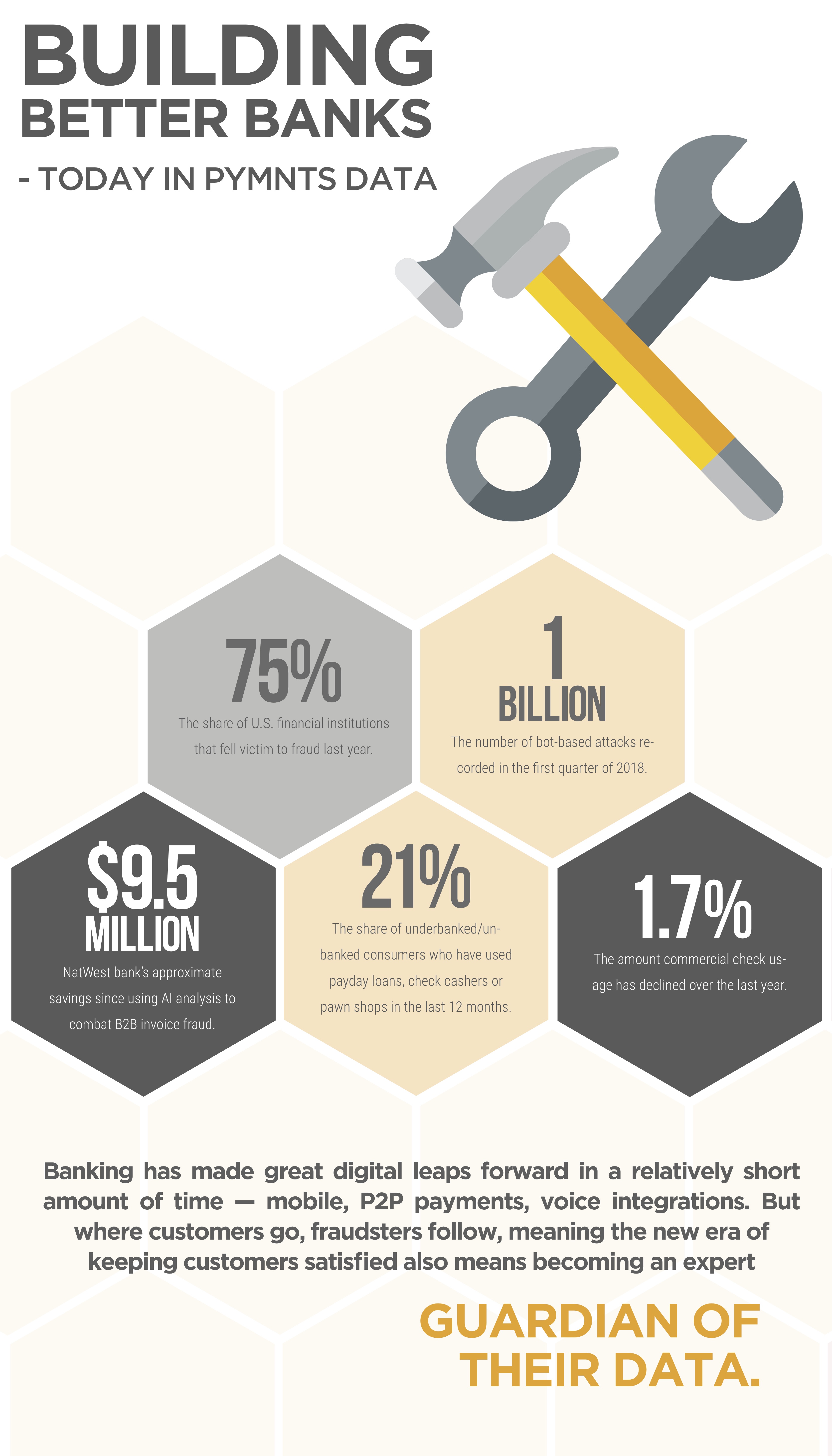 75 percent: The share of U.S. financial institutions that fell victim to fraud last year.
 Add as Preferred Source