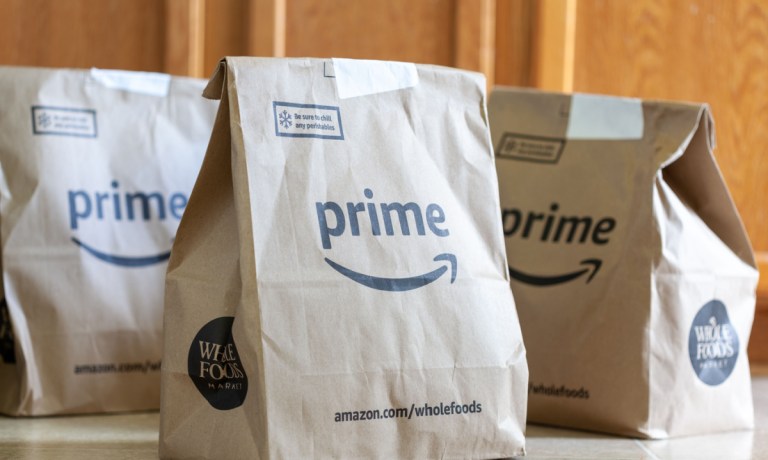
The program, offering deliveries within around 30 minutes or less, is being piloted in parts of Philadelphia and Seattle, the company announced Monday (Dec. 1).
“Amazon is utilizing specialized smaller facilities designed for efficient order fulfillment, strategically placed close to where Seattle- and Philadelphia-area customers live and work,” the announcement said. “This approach prioritizes the safety of employees picking and packing orders, reduces the distance delivery partners need to travel, and enables faster delivery times.”
According to the announcement, the program is being offered through Amazon Now, part of the company’s shopping app and websites for customers in eligible areas. Shoppers in and around the two test cities can look for the “30-Minute Delivery” option on the Amazon app and homepage to see if they have service where they live.
The program charges a $3.99 delivery fee for Prime members – $13.99 for non-Prime customers – and a $1.99 “small basket fee” for orders below $15. Available offerings include grocery items like eggs, milk, fresh produce, as well as paper products, electronics, over-the-counter medication and cosmetics.
Amazon has this year been focused on faster deliveries amid competition from the likes of Walmart, Target, Uber Eats and Instacart. The company announced in June it would expand next-day and same-day delivery to 4,000 towns, and launched a feature in October that allows Prime members to add last-minute additions to their delivery orders.
Advertisement: Scroll to Continue
As PYMNTS wrote last month, Walmart has been emphasizing its low prizes, while Amazon positions itself as the “everything store.” Both retail goliaths, that report said, are courting an
“increasingly fickle and cash-strapped” customer.
“Global headwinds have forced consumers to make sharper trade-offs, prioritizing must-haves over the nice-to-haves,” PYMNTS wrote, citing in-house research showing that more consumers are finding it tough to get by.
A little more than a quarter of consumers surveyed said they had trouble paying their bills in October, the highest share going back at least two years. And nearly 70% said they were living paycheck to paycheck, the second-highest level over two years and almost equal to the record high recorded this summer.
Amazon’s third-quarter 2025 results, announced in late October, included a marked shift in customers shopping for groceries online, and “at relatively lower price points,” the report added.
As PYMNTS reported, Amazon said online grocery sales jumped as more customers turned to digital channels for everyday purchases. Chief Financial Officer Brian Olsavsky noted that “customers are finding more value in recurring essentials like groceries and household items.”