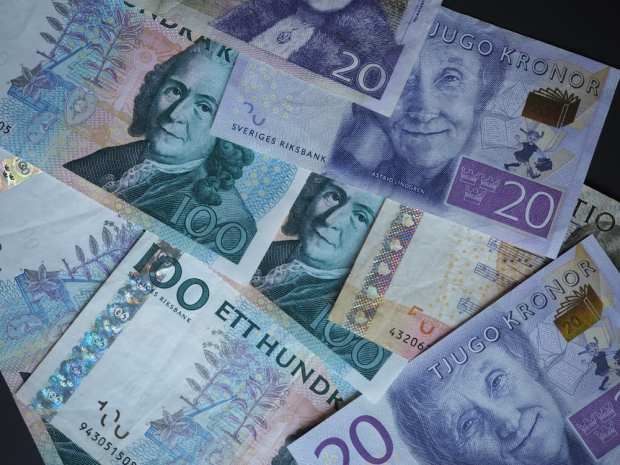
Sweden’s central bank has asked the country’s lawmakers to define “the concept of legal tender,” and the role it plays in an increasingly digitized society, according to report in Bloomberg.
The Riksbank wants the government to create a committee to figure out how to move forward.
We’d love to be your preferred source for news.
Please add us to your preferred sources list so our news, data and interviews show up in your feed. Thanks!
“For 350 years, Swedish society has relied on the Riksbank to provide the general public with various forms of the country’s currency, the Swedish krona,” the bank said in a statement. “Cash issued by the Riksbank has been legal tender since the 1850s. Cash use has decreased rapidly in Sweden and a scenario within the not-too-distant future, in which cash is not generally accepted, can’t be ruled out.”
Many citizens in the country are turning to credit and debit cards, and other payment options that exist in the digital world. Also, some bank branches no longer offer cash withdrawals and many stores and restaurants are in the process of phasing out paper tender. One of the fears against this in the country is that the digital payments system could crash.
The bank is looking into its own digital currency, and lawmakers are considering forcing banks to handle actual cash. The bank said the committee should have “all-round expertise” to come up with amendments and laws “so that Sweden continues to have a stable and efficient payment market.” It’s something that needs to happen quickly, the bank said, because “time is of the essence.”
Earlier this year, lawmakers in Philadelphia passed a ban on cashless stores, making it the first major city in the U.S. to do so, according to a report by The Wall Street Journal.
The new law will take effect in July and would require most retail outlets to accept physical currency. New Jersey recently passed a similar law and New York City is on the path to doing so as well. Massachusetts already requires businesses to accept cash.


 Add as Preferred Source