As summer begins in the midst of this long holiday weekend kicked off by Juneteenth, the consumer spending outlook appears to contain a contradiction.
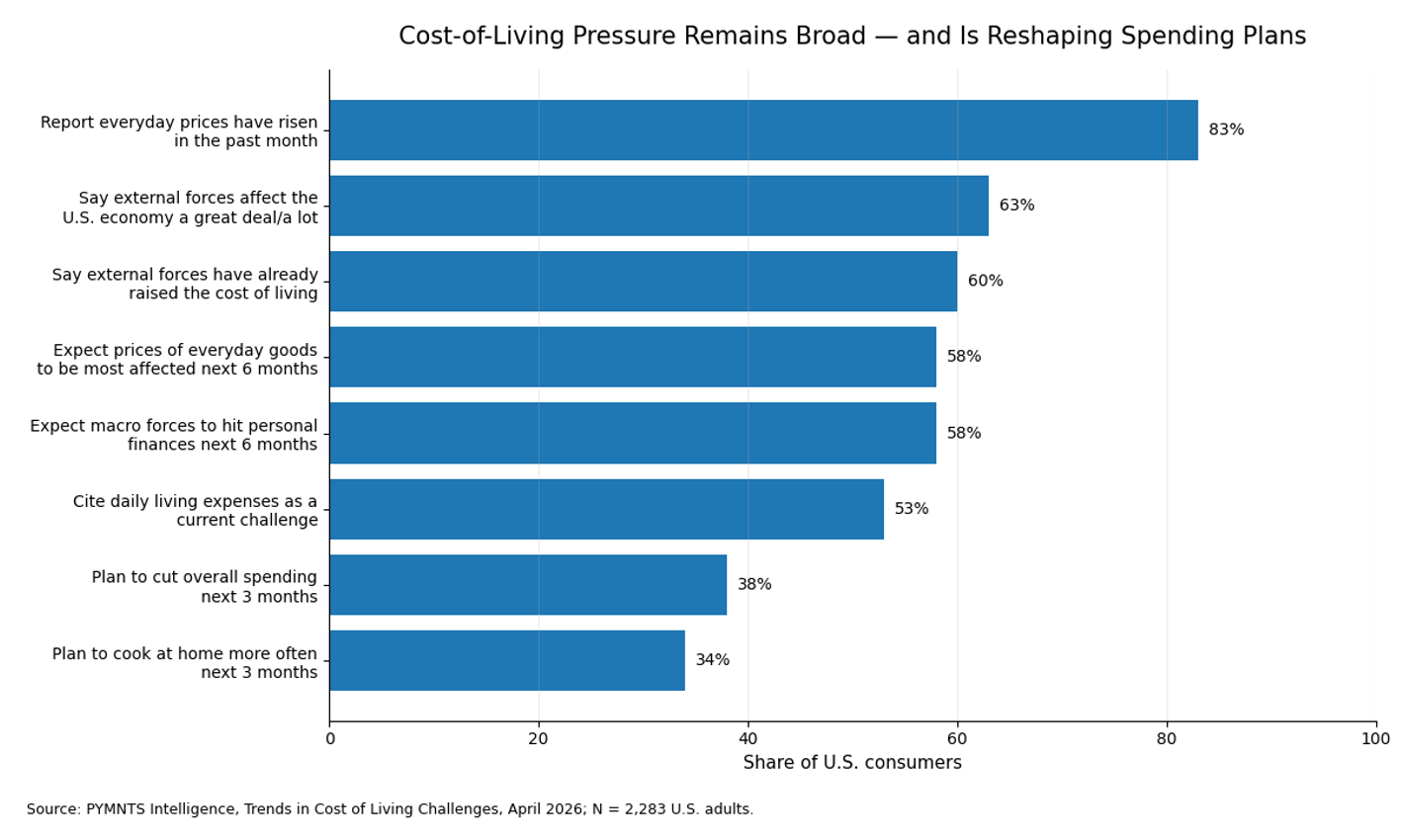
PYMNTS Intelligence research shows that 83% of consumers say everyday prices increased. Nearly two-thirds say external forces are affecting the U.S. economy a great deal or a lot. Fifty-eight percent expect broader economic forces to affect their personal finances over the next six months. Yet only 38% say they plan to reduce spending during the next three months.
At first glance, those numbers seem difficult to reconcile. If consumers remain worried about prices and the economy, why aren’t more preparing to cut back?
The answer may be that households are not making spending decisions according to the categories used by economists, merchants or card issuers. They are making them according to their own priorities.
As PYMNTS CEO Karen Webster wrote earlier this year, “essential isn’t a characteristic of the expense. It’s the characteristic of the person spending the money on it.”
The Same Purchase Means Different Things to Different Households
The latest Cutback Economy findings show that cost pressures remain widespread.
In our survey, 53% cited daily living expenses as a current challenge. Forty-four percent pointed to the broader economic environment, 43% cited housing costs and 42% identified future planning and savings as concerns..
But those figures reveal only part of the story. Private school tuition may be viewed as entirely discretionary by one family and completely untouchable by another. Grocery delivery may look like a convenience purchase in transaction data but function as a necessity for a working parent balancing job schedules, childcare and household responsibilities.
And over the next few weeks, at least for some households, a summer vacation may be the first item cut. For others, it may be protected because it represents the one annual family trip already planned and budgeted for months ago. For some consumers, dining out becomes discretionary. For others, convenience-driven purchases remain embedded in daily routines.
The same category can occupy entirely different positions in different household budgets.
Understanding Priorities
We’d love to be your preferred source for news.
Please add us to your preferred sources list so our news, data and interviews show up in your feed. Thanks!
That creates a challenge for financial institutions, rewards programs and merchants attempting to forecast consumer behavior.
Traditional spending analysis often starts with categories. Travel. Dining. Entertainment. Groceries. Subscriptions.
Consumers do not necessarily think that way.
The PYMNTS Intelligence findings suggest households evaluate spending through the lens of commitments, obligations and personal priorities. Family-related expenses, housing costs, childcare obligations and recurring household purchases often receive protection even when budgets tighten.
For issuers, that may increase the value of rewards programs tied to categories consumers are unlikely to abandon. For loyalty programs, it raises the importance of identifying where customers place spending within their hierarchy of priorities rather than relying solely on merchant categories.
Installment products have traditionally been associated with retail purchases, but the broader opportunity may lie in helping consumers manage larger recurring expenses they view as important enough to preserve regardless of economic conditions. Families often work harder to protect spending connected to children, education, household operations and family support than many traditional discretionary categories.
A Different Way to Read the Summer Consumer
The PYMNTS data does not point to a consumer preparing for a spending surge. Nor does it point to one preparing for widespread retrenchment. Instead, it suggests consumers are entering the summer with a clear sense of which expenses matter most to them personally.
That reality complicates spending forecasts, but it also creates opportunities.



 Add as Preferred Source