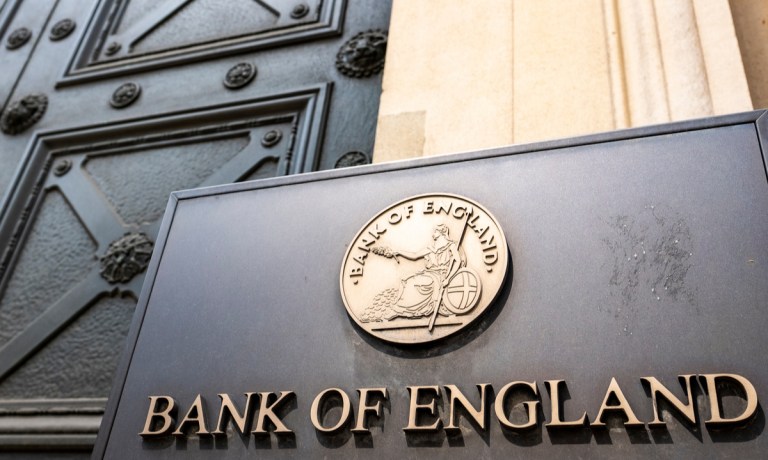
A top official at England’s central bank reportedly sees some potential in stablecoins.
Sarah Breeden, deputy governor for the Bank of England (BOE), said at a conference in London Wednesday (Sept. 3) that stablecoins could make it easier and less costly to transfer money across borders.
“Stablecoins, for a long time the preserve of crypto markets, are beginning to go ‘mainstream,’” said Breeden, whose comments were reported by Bloomberg News.
“Given they are an existing form of ‘digitally native’ money, their safe adoption could unlock faster, cheaper settlement for cross-border transactions as well as supporting trading of tokenised securities.”
She added that she anticipates the emergence of a “multi-money” world in which stablecoins play a role, and said the BOE’s regulation plans are being influenced by the Trump administration’s recent legislation aimed at mainstreaming stablecoins.
According to Bloomberg, the BOE will later this year launch a consultation on its revised stablecoin regulation strategy. The bank is relaxing its stance following industry pushback, the report added.
Advertisement: Scroll to Continue
Bloomberg notes that Breeden’s comments indicate a more pro-stablecoin attitude from the BOE following Governor Andrew Bailey’s warning earlier this year that the digital assets could undermine the public’s trust in money.
Breeden said officials in the U.K. are keeping an eye on the U.S. stablecoin legislation.
“We want the US regulation to deliver safe stable coins,” she said. “US dollar stable coins will have an influence all around the world.”
She went on to say that it is “absolutely essential that we produce a regime that supports the issuance of sterling stablecoins.”
As PYMNTS noted in a report last month, executive commentary during the most recent round of earnings calls — from firms as diverse as SoFi, Coinbase, Visa, PayPal and Robinhood — all focused on the increasing role stablecoins are playing in cross-border payments.
“Cross-border payments represent a sprawling and inefficient market, with most transactions consisting of B2B flows,” PYMNTS wrote.
“The inefficiencies in this system include multi-day settlement times, high fees, limited transparency and heavy reliance on intermediaries. Stablecoins offer a technical alternative capable of addressing these pain points — instantly settled transactions, lower costs, programmable transfers and global accessibility.”
The executive commentary shows that stablecoins are being embedded into the existing financial system not as replacements for fiat money, but as digital settlement layers that can function across borders with greater efficiency than traditional networks.
“The distinction matters,” the report added. “This isn’t a wholesale replacement of global finance; it’s a technological competition around the means of settlement, with stablecoins offering a leaner architecture for moving money internationally.”