Somewhere between the first ticket purchase and the final prop bet, $20.2 billion changed hands.
That was the projected spending around this year’s Super Bowl on food, drinks, apparel, tickets, streaming and festivities, with nearly $2 billion more in legal wagers in the United States on everything from the final score to which celebrities would attend. About 70,000 fans packed the stadium. More than 125 million more streamed from home. And every one of those transactions had to work instantly, invisibly and at a scale that would strain any system not built for the moment.
Welcome to the Experience Economy, a concept first named in a 1998 Harvard Business Review paper that has since become a defining feature of consumer behavior. Consumers are spending on participation, not possession, placing greater weight on how moments unfold than on what they own afterward. For payments providers, major live events expose whether digital commerce can truly scale without friction.
The numbers reflect how deeply commerce and participation are overlapping and the degree to which financial engagement has become part of the moments fans value most.
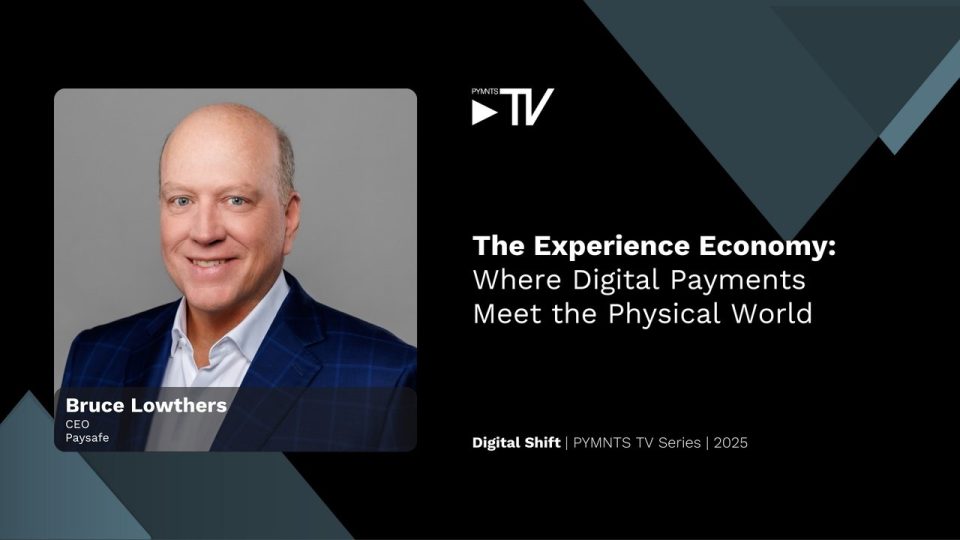
“Betting has always been part of the culture. We’ve digitized it,” Paysafe CEO Bruce Lowthers told PYMNTS CEO Karen Webster in an interview.
Consumers expect every interaction to work at scale, regardless of volume or stakes, and such events spotlight opportunity and pressure for platforms and payments providers, he said.
Ticketing and the Journey Before the Game
The Experience Economy does not begin with the opening kickoff or the first musical note. It begins with planning and the early decision to participate. For major sports events, this frequently starts with the ticket purchase, which can itself be a high-stakes transaction.
This first payment matters because it sets expectations for everything that follows, Lowthers said.
“Our job is to make that as easy and smooth as possible,” he said.
If the process feels clunky or uncertain at the very first interaction, it reshapes how a consumer perceives what comes after, even if the payoff is a shared moment with friends and family.
Payments Choice Shapes Moments, Not Just Transactions
Choice in how consumers pay has emerged as a core component of experiences that unfold across digital and physical boundaries, Webster said. Fans at a game may want to use a digital wallet, card, prepaid funding or emerging localized methods. Once outside the event, streaming a game, ordering merchandise or placing a wager, their expectations do not change. They expect seamless choice, regardless of channel or context.
Lowthers framed this preference not as a luxury but as a baseline for participation. It’s the consumer’s choice how they want to pay. Supporting a range of methods across platforms and geographies means commerce systems must be built to route payments flexibly, anticipate peak loads and fall back gracefully, all without the consumer noticing.
Trust as Infrastructure
When payments succeed, nobody notices them. When they fail, the failure becomes the experience.
Trust is woven through every component of modern commerce, Lowthers said.
We’d love to be your preferred source for news.
Please add us to your preferred sources list so our news, data and interviews show up in your feed. Thanks!
“You’re trying to build a fabric of trust with consumers that their money goes where they want it to go, when they want it to go,” he said.
That fabric must hold not only under normal conditions, but under moments of extreme demand where latency, volume and emotional stakes are all elevated, he said.
The Super Bowl and other major events place that fabric under strain. These events see concentrated surges in transactions, across ticket purchases, merchandise, in-venue concessions, streaming passes, digital goods and wagers, all at once. If any single piece of the system misfires, trust becomes visible in its absence. The industry’s response has been to push systems deeper into automation, distributed routing and adaptive risk management.
Fraud Controls Without Breaking the Experience
As commerce and participation have become more intertwined, fraud prevention has shifted from a back-end control to a front-line part of experience design. Traditional static rules slow down when fraudsters strike. They also slow down legitimate consumers, creating false positives that interrupt an otherwise smooth interaction.
“We rebuilt the way we look at fraudulent transactions,” Lowthers said. “We’re using AI to reduce false positives, so the good guys aren’t caught in the net.”
The aim is to prevent loss without letting defensive controls become offensive to the user experience, he said. In the Experience Economy, where participation and transaction are often simultaneous, that balance is a defining operational challenge.
Wagering and Shared Engagement
More than ever, wagering is part of how people participate in major events like the Super Bowl. While betting itself has been around for centuries, modern digital platforms have made it part of the broader moment of engagement. Fans watch, interact, place bets and discuss outcomes all in real time, shaping how they experience the event itself.
This integration of financial participation does not happen in isolation. It requires identity verification, compliance controls, routing to regulated operators and safeguards to protect consumers and operators. It also underscores how payments, wagering and experience are converging into a single continuum rather than separate lanes.
Where the Experience Economy Is Headed
The Experience Economy is defined by coherence, Lowthers said. It’s how well a complex set of systems works together so that consumers never stop living the moment they came to enjoy.
From the first ticket purchased on a mobile app to the last wager, “people don’t want to think about the transaction,” he said. “They want to enjoy the moment they paid for … and everyone wants to feel like a VIP.”


 Add as Preferred Source