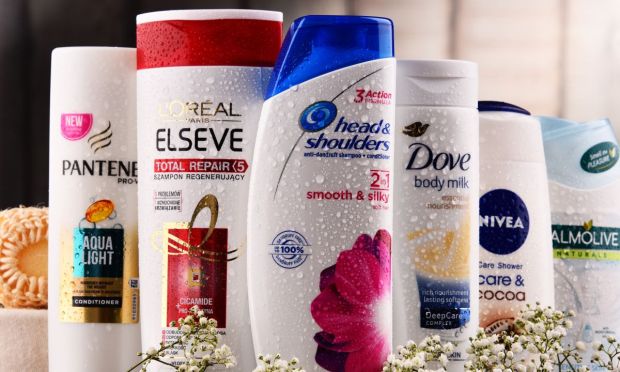
The consumer goods company behind Dove and Vaseline serves about 300,000 direct customers, from supermarket chains to local distributors. In the pilot markets, 95% of orders now pass through without manual work, refund claims are settled twice as fast and new customer onboarding takes 90% less time, Castro said.
Four Agents Read the Order and One Checks the Work
NOVA splits the job among five agents built on Microsoft Foundry. Four read an incoming email, work out its context and pull out the order, and a fifth checks the result before the agents enter the order into Unilever’s SAP system, Graham Sommer, Unilever’s head of customer operations, said in a Consumer Goods Technology interview. Anything missing or unusual goes to a person for review, according to the Microsoft case study.
Unilever designed NOVA to meet customers in whatever format they already use. “Customers shouldn’t have to adapt to our technology,” Deepalok Roy Chowdhury, Unilever’s global director for order-to-cash, said in the Microsoft case study. A retailer that works with dozens of suppliers can’t be expected to convert every purchase order to each one’s standard. The agents also help validate claims, checking orders to determine whether a customer is at fault, Sommer said.
We’d love to be your preferred source for news.
Please add us to your preferred sources list so our news, data and interviews show up in your feed. Thanks!
Nestlé Turns to AI Agents for Collections
Unilever isn’t the only consumer goods giant pushing agents past order entry into the cash side of the cycle. Nestlé is turning to SAP’s AI agents for overdue invoices, using an accounts receivable assistant whose four agents draft follow-up emails, build and work through disputes and prepare accounts for collectors, PYMNTS reported.
Much of that work is already automated. The average company surveyed now automates 73% of accounts receivable processes, up from 55% a year earlier, according to the PYMNTS Intelligence report “Time to Cash: What Two Years of Data Say About Faster Cash and Rising Risk,” which surveyed 100 U.S. CFOs in July. Integration complexity is the barrier CFOs cite most for going further, with 90% naming it, up from 67% in 2025, the report found.
Finance chiefs expect the biggest payoff from agents that work across systems rather than inside one. Some 42% of CFOs at companies with at least $1 billion in revenue anticipate high-impact results from agentic AI that coordinates workflows across enterprise resource planning, receivables, payables and treasury platforms, PYMNTS Intelligence found in its December 2025 report “CFOs Push AI Forward but Keep a Hand on the Wheel.”
Unilever Pursues 50 Markets as Input Costs Climb
NOVA has processed thousands of orders in production, and Unilever plans to expand it to more than 50 markets, according to the Microsoft case study. North America, Unilever’s largest market, is next, and the company has rolled out eight agents worldwide, Sommer said. The early months went to settling on the right architecture, Castro said, since NOVA is the company’s first multi-agent supply-chain system at this scale.
The rollout lands in a tougher cost year. Unilever now expects about €900 million of commodity inflation in 2026, up from an earlier midpoint of €850 million, Srinivas Phatak, Unilever’s chief financial officer, said on the company’s third-quarter earnings call Wednesday (Oct. 28). Pricing stepped up to 2.3% in the quarter, and Phatak said the company is driving productivity initiatives across every line of the profit and loss statement and does not use pricing to manage margins.
For all PYMNTS AI coverage, subscribe to the daily AI Newsletter.


 Add as Preferred Source