Offering contactless payment options helps restaurants increase sales, too. Diners who used touchless credit cards spent 30 percent more in the first year of owning their card than those who used swipe cards. This percentage remained consistent whether consumers were in low-, medium- or high-spending groups.
Another way eateries have attracted customers and encouraged existing ones to spend more is through loyalty and rewards programs. Delivering On Restaurant Rewards, a survey by PYMNTS and customer experience platform Paytronix, found that 39 percent of all restaurant customers would likely buy more if their restaurants provided loyalty and rewards programs. These incentives could encourage four out of 10 restaurant customers, 93 million, to spend more on food orders.
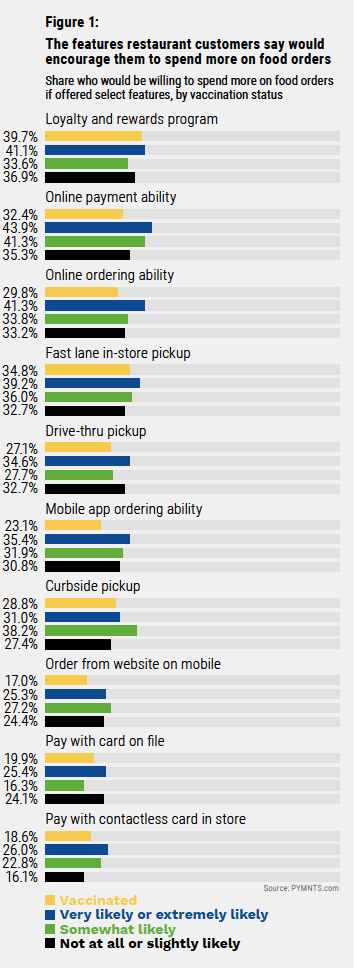
A correlation can also be found between vaccination and loyalty and rewards program use, interestingly enough, with restaurant customers who are either vaccinated or highly likely to get vaccinated being the most likely to spend more on their food orders if loyalty and rewards programs are present. Loyalty and rewards programs’ appeal suggests that they will continue to serve as a key differentiator for restaurants that want to engage customers long-term.
Restaurants continue to navigate conditions introduced by the pandemic, but the most successful establishments have adopted many of these features, technologies and initiatives. They appear to have learned that staying competitive and keeping revenues flowing is more possible when eateries stay attuned to customers’ demands.