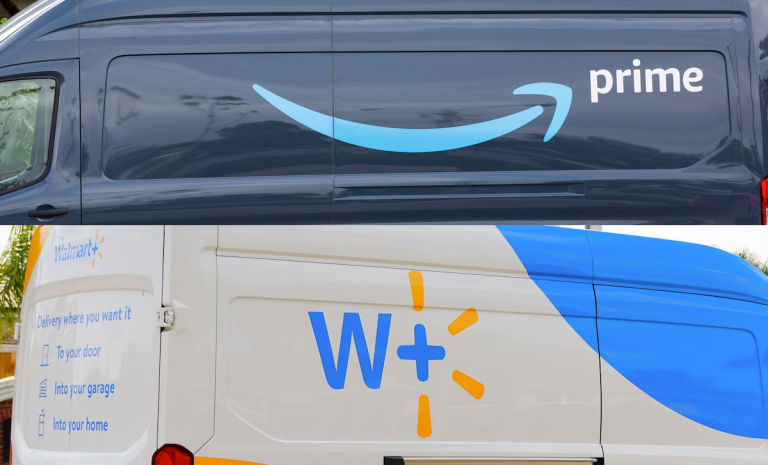
However, the PYMNTS Intelligence report “Winning Both Carts: Millennials Drive Surge in Having Amazon Prime & Walmart+ Subscriptions” suggests that more consumers in the United States are sidestepping the rivalry altogether and signing up for both. It’s not just a sign of subscription fatigue. It’s evidence of a new kind of retail hedging strategy.
The report found that the number of consumers holding dual subscriptions nearly doubled between 2021 and early 2025.
Millennials are at the forefront, with 37% now paying for both. Although Amazon still dominates discretionary online retail and Walmart continues to own groceries, the overlooked story is how consumers are layering these services to shield themselves from higher prices and supply chain uncertainty.
Consumers aren’t loyal in the way retailers once defined the term. Instead of pledging allegiance to a single membership, they’re stacking them.
One month, it’s Walmart’s fuel discounts and grocery convenience; the next, it’s Amazon’s streaming perks and fast delivery on electronics. This dual-track approach reflects not only the inflationary pinch of the past several years but also the growing view of subscriptions as essential household utilities rather than optional luxuries.
Advertisement: Scroll to Continue
Key findings include:
- Dual subscriptions are surging. Just 12% of consumers held both Prime and Walmart+ memberships in 2021. By February 2025, that number had doubled, with millennials driving much of the growth.
- Millennials are the power subscribers. Eight in 10 millennials maintain at least one retail subscription, and 37% pay for both. By contrast, 42% of baby boomers and seniors have neither. Even financially stretched households treat these memberships as must-have tools for savings and convenience.
- Walmart is the grocery gatekeeper. Nearly 30% of consumers said their most recent grocery purchase came from Walmart, compared with 1.3% for Amazon. Among dual subscribers, 44% bought groceries at Walmart versus 4% at Amazon.
Taken together, the numbers show how Walmart has positioned itself not as Amazon’s replacement but as its complement.
Many of Walmart’s gains come not from luring in the uncommitted but from persuading Prime members to add a second subscription. In that sense, Walmart has turned Amazon into a pipeline of potential new customers, an unusual dynamic in the retail wars.
The report also finds that dual subscribers are the highest-spending cohort. They average $110 per retail transaction, compared with $78 for Prime-only members and $75 for Walmart+-only shoppers. Their spending spikes during spring sales, back-to-school season and the December holidays, making them a particularly lucrative segment for both companies.
That spending behavior underscores that consumers are not abandoning one platform for the other but weaving both into their daily lives.
For households living paycheck to paycheck, Walmart+ offers fuel discounts and grocery savings. For high-income households, Prime continues to dominate discretionary retail. For many consumers, the answer is simply both.
Retailers once competed to be the one-stop shop. Increasingly, the winners are those willing to share the cart.