With car prices skyrocketing, auto dealers are reportedly facing pressure from both regulators and customers.
For example, the Financial Times (FT) reported Tuesday (May 26), the Federal Trade Commission (FTC) wrote to 97 dealer groups in March warning against “deceptive or unfair” sales practices. It was a move the Virginia Auto Dealers Association called a “warning shot to the auto industry that needs to be heard,” the FT added.
Dealers are also enmeshed in legal cases aiming to prevent electric car companies from selling directly to consumers, going to court to defend a franchise model that critics argue places a “middleman tax” on transactions.
We’d love to be your preferred source for news.
Please add us to your preferred sources list so our news, data and interviews show up in your feed. Thanks!
“The dealers have been successful over the decades in building protective walls around themselves,” said Mark Strand, deputy chief economist at Cox Automotive. “But cracks are starting to show.”
The report also noted that dealers around the country are facing the wrath of consumers whose household budgets are strained and who are seeing their spending power wane. It’s a trend covered by recent research by PYMNTS Intelligence.
“More than one-third of adults in the United States were in active financial retreat as of April, while spending adjustments increasingly centered on cutting everyday expenses, delaying larger purchases and redirecting budgets toward recurring obligations rather than discretionary categories,” PYMNTS wrote Tuesday.
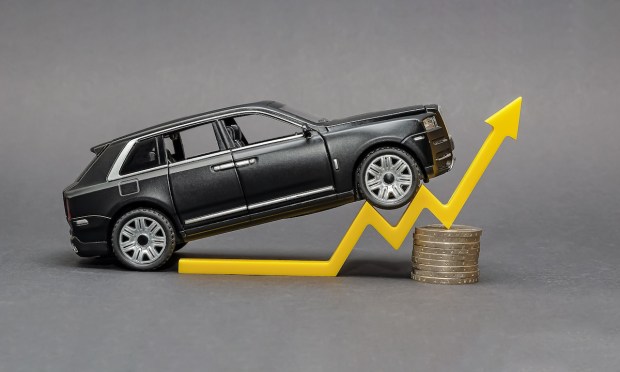
Against this backdrop, consumers are dealing with an environment in which the average U.S. sticker price for a new car is more than $50,000, compared to about $40,000 in 2020, the FT added, citing Kelley Blue Book data. Nearly one in five American buyers pay more than $1,000 in monthly car payments.
In addition, many drivers who head to the dealership to trade in old vehicles for new ones are discovering their cars aren’t worth what they owe.
Around 30% of borrowers who traded in a car to buy a new one during the first quarter had negative equity, the Wall Street Journal said in a report last month citing data from car-shopping website Edmunds. Those consumers owed about $7,200 on average before getting a new loan, a 42% increase from the same quarter five years ago.
“We’re the tip of the spear,” Iowa-based automotive dealer Jeff Weber told the FT. “They come into the showroom and realize that the interest rates are higher, and the cost of the car is higher, so their monthly payment is higher too. We are the bearer of bad news, even if these things are out of our control.”


 Add as Preferred Source