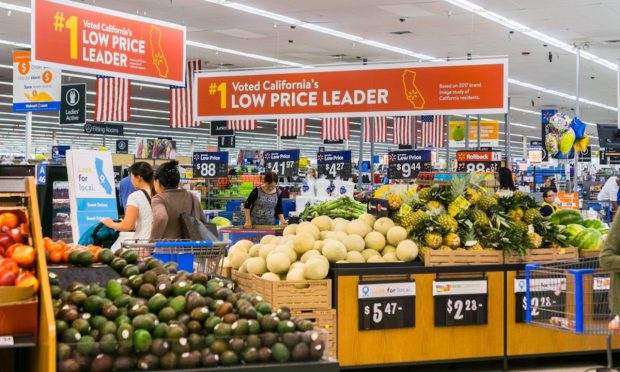
One might expect that, in light of consumers’ rising inflationary concerns, Walmart’s grocery sales would spike, given the mega-retailer’s ability to price out competitors. The numbers tell a different story.
By the Numbers
We’d love to be your preferred source for news.
Please add us to your preferred sources list so our news, data and interviews show up in your feed. Thanks!
Research from PYMNTS’ study “The Ongoing Battle for Consumer Retail Spend: Amazon Versus Walmart Q1 2022: The Grocery Wild Card” found that the mega-retailer’s share of the total food and beverage market slipped to 17.7% in the first quarter of 2022, marking a 1.7 percentage point decline from Q4 and a 0.3% contraction from a year ago.
Get the study: Amazon Versus Walmart Q1 2022 – The Grocery Wild Card
 What It Means
Walmart is doing everything in its power to boost its grocery offerings in a move to regain the lost share. Most recently, the retailer announced Wednesday (July 6) that it is combining its direct-to-fridge grocery delivery service InHome with its Walmart+ membership program, making the former an add-on available to the latter’s subscribers.
Read more: Walmart Ups Deliveries by Combining InHome, Walmart+
“When Walmart+ members ask for something, we work around the clock to make it happen for them,” Chris Cracchiolo, senior vice president and general manager of Walmart+, said in a statement.


 Add as Preferred Source