The pandemic changed everything, and healthcare is still undergoing a digital transformation from pre-COVID-19 patterns to a new type of hybrid engagement that promises better patient experiences and cost and time efficiencies, with more positive outcomes in the offing.
For the study “The ConnectedEconomy™: Omnichannel Healthcare Takes Center Stage,” a PYMNTS and CareCredit collaboration, we surveyed over 2,700 consumers and found that nearly half are mixing channels — virtual and in office — in a new care delivery paradigm.
Get your copy: The Connected Economy™: Omnichannel Healthcare Takes Center Stage
We’d love to be your preferred source for news.
Please add us to your preferred sources list so our news, data and interviews show up in your feed. Thanks!
- 46% of consumers engage with healthcare providers using both physical and digital channels.
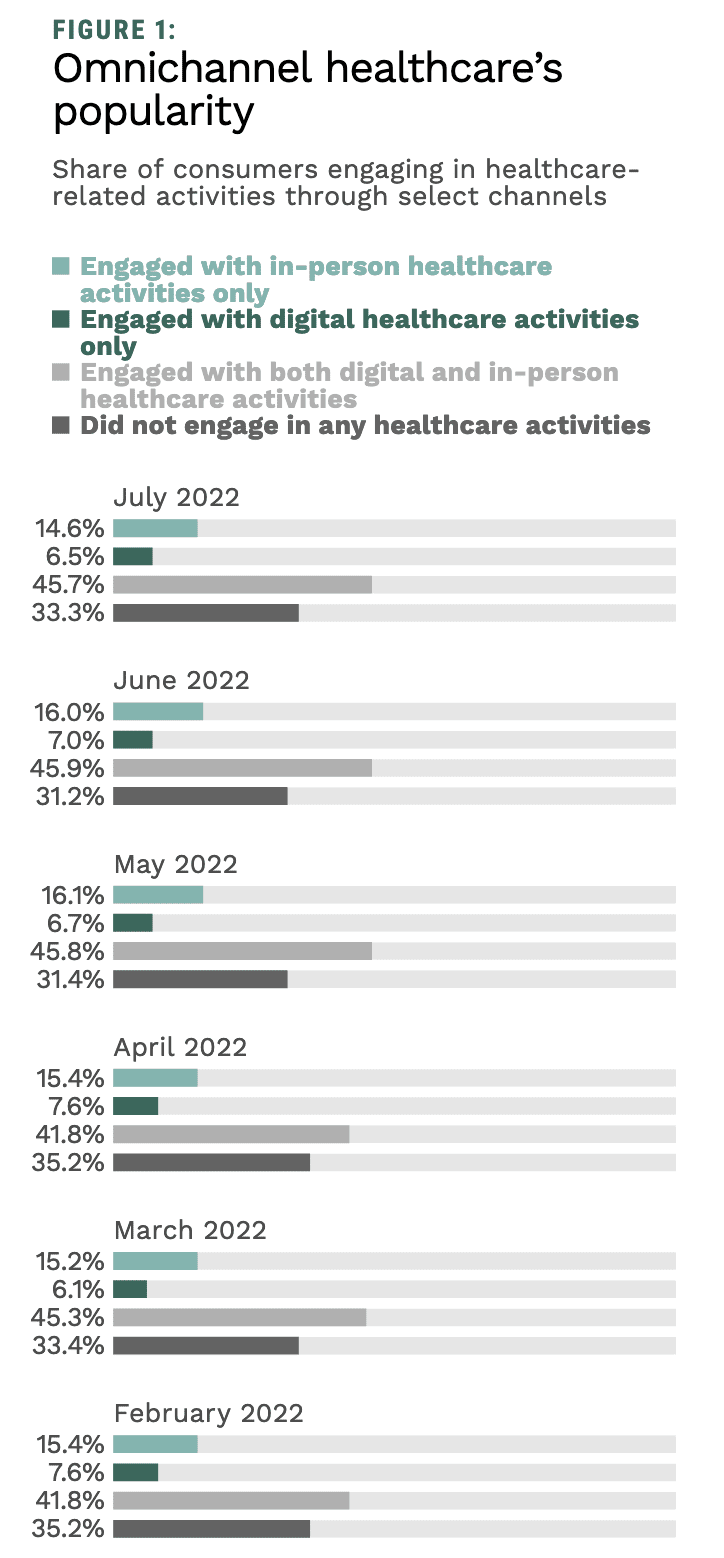
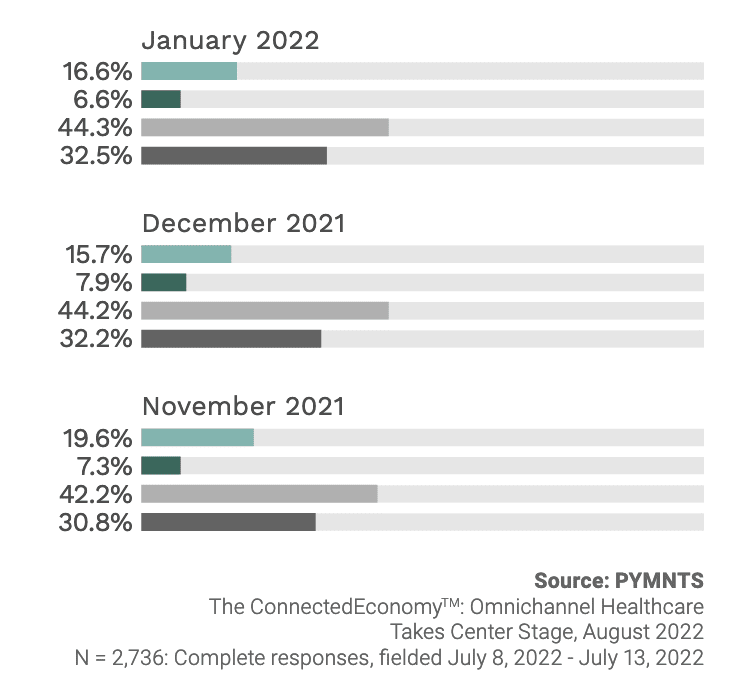
Combining channels for healthcare delivery is a fairly new experience for consumer-patients, powered by the meteoric rise of telehealth over the past 30 months.
Noting that 46% of U.S. consumers engage with healthcare providers using both physical and digital channels, the study states, “This means consumers are using a mix of both in-person and online healthcare channels — as opposed to one or the other — 8% more than they did in November. Similarly, 25% fewer consumers used only digital channels and 11% fewer used only brick-and-mortar channels last month than just one month prior.”
Additionally, we found that “one of the most common digital healthcare activities was accessing online-only healthcare through sites like Doctor On Demand, and such sites have seen a 26% increase in usage since November. Engagement in telemedicine more broadly has also risen since November, with 23% growth for telemedicine appointments with behavioral health specialists and 17% growth for telemedicine appointments with doctors.”
Read it now: The Connected Economy™: Omnichannel Healthcare Takes Center Stage


 Add as Preferred Source