As economic pressures continue, consumers across demographics are making changes to their restaurant purchasing behaviors.
The December edition of PYMNTS’ Restaurant Digital Divide study, The 2022 Restaurant Digital Divide: Restaurant Customers React To Rising Costs, Declining Service, draws from a December survey of a census-balanced panel of more than 2,300 consumers who regularly purchase food from restaurants, seeking to understand how their dining habits have changed.
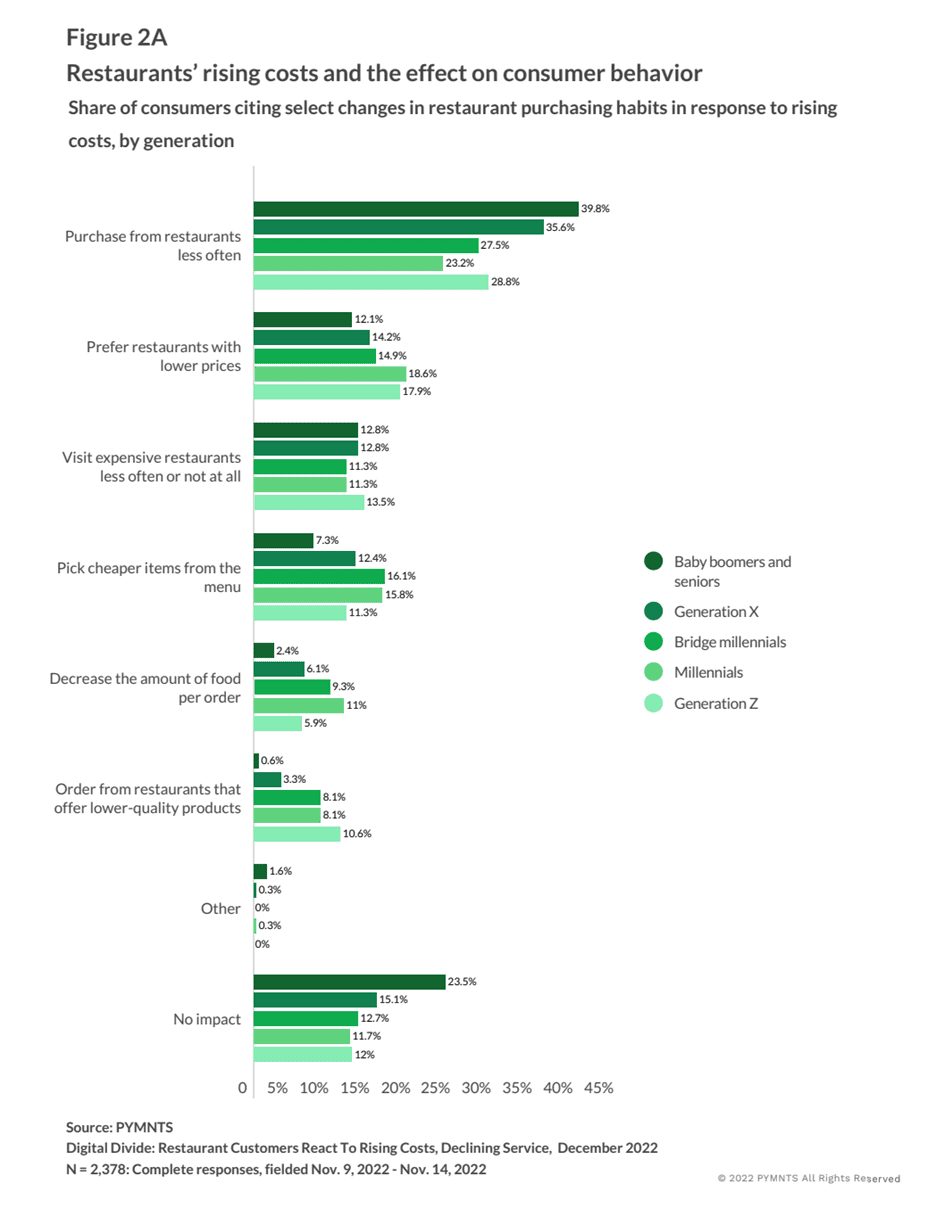
The study found that, across generations, the vast majority of consumers have made adjustments in response to rising prices. Eighty-eight percent of millennials and Generation Z consumers, 87% of bridge millennials and 85% of Generation X consumers reported making such changes.
We’d love to be your preferred source for news.
Please add us to your preferred sources list so our news, data and interviews show up in your feed. Thanks!
Get your copy: The 2022 Restaurant Digital Divide
The least likely to adjust their habits were baby boomers and seniors, but even the vast majority of these older diners made some changes, with more than three-quarters of these consumers reporting doing so.
The most common change for diners to make in response to economic challenges is cutting back on the frequency with which they purchase from restaurants. Forty percent of baby boomers and seniors, 36% of Gen X consumers, 28% of bridge millennials, 23% of millennials and 27% of Gen Z diners did so.
Meanwhile, while older consumers may be disproportionately likely to scale back how often they dine out, those from younger generations are disproportionately likely to opt for lower-priced restaurants. Eighteen percent of Gen Z diners and 19% of millennials surveyed reported that they have been preferring restaurants with lower prices amid rising costs. In contrast, only 15% of bridge millennials, 14% of Gen X consumers and 12% of baby boomers and seniors said the same.
As such, it seems that older consumers are more willing to cook more food at home but less willing to scrimp on quality, while younger consumers continue to prioritize convenience but are open to lower-quality dining experiences.



 Add as Preferred Source