The impact goes beyond stranded tennis professionals.
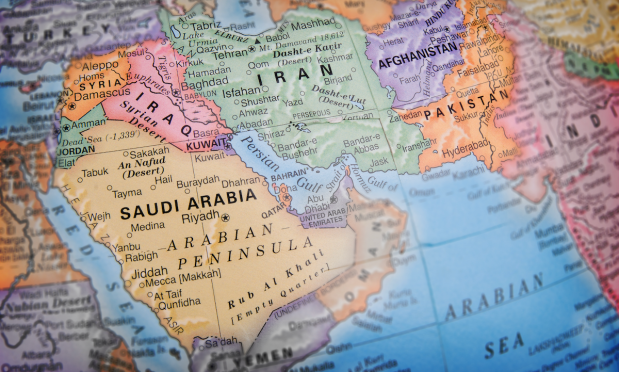
Amazon Web Services (AWS) announced Sunday (March 1) an outage at its United Arab Emirates data center after a rocket attack struck the facility. Meanwhile, shipping activity in the Strait of Hormuz, a major energy corridor, has been disrupted by the conflict in the region.
Seven of the world’s largest maritime insurance mutuals announced that as of Thursday (March 5), they will automatically terminate their risk insurance coverage for ships entering the Persian Gulf, which is where the Strait of Hormuz is located.
The lesson for global businesses cannot be viewed solely as a supply chain crisis or a tech outage, but rather as a convergence event that tests whether organizations can operate when the physical and digital backbones of globalization are stressed simultaneously.
Traditionally, resilience planning has assumed a layered hierarchy of risk. Physical supply chains could be disrupted by war, piracy or sanctions; digital systems, while vulnerable to cyberattacks, were presumed geographically abstracted by hyperscale cloud architecture.
That assumption now looks relatively dated for modern executives. Energy logistics, subsea cable routes, airspace corridors, shipping lanes and data center clusters share common geographies. When those geographies destabilize, the cascading effects are no longer theoretical. They can, and do, spread simultaneously through fuel markets, fiber routes, cloud regions, insurance underwriting, workforce mobility and identity security systems.
To fraudsters, every global crisis represents an opportunity. Already, the Dubai Police said on social platform X that it has detected scammers exploiting recent developments by impersonating employees affiliated with the “Dubai Crisis Management” entity, falsely claiming ties to Dubai Police, to seize digital identity data (UAE Pass) and the Emirates ID card (EID).
Read also: How CFOs Can Manage for Today’s Supply Chain Choke Points
Corporate Response Moves From Continuity to Optionality
The cascading nature of current disruptions reveals how tightly coupled modern infrastructure has become. Multiple systems that once failed independently are now coupled enough that they can fail together.
Forward-looking organizations are shifting their posture from continuity planning, which assumes temporary disruption, to geographic optionality, which assumes volatility may persist or recur unpredictably. Digital infrastructure’s physicality, for example, is often overlooked. Hyperscale cloud regions consist of clusters of data centers connected to specific power grids, fed by particular fuel supplies, and linked to the broader internet via defined fiber routes.
We’d love to be your preferred source for news.
Please add us to your preferred sources list so our news, data and interviews show up in your feed. Thanks!
“If you think about the blind spots very often for companies, it’s very hard to figure out exactly their digital footprint in the modern age,” Johan Gerber, executive vice president of security solutions at Mastercard, told PYMNTS in an interview posted Monday (March 2). “And if CISOs can’t see these things, they can’t protect [their organizations].”
For C-suite leaders, the convergence of these risks is reshaping enterprise risk management frameworks. The old model separated geopolitical analysis from IT resilience planning and supply chain continuity. Today, those domains intersect. A shipping disruption that drives up diesel prices may indirectly strain data center operations, while a conflict that prompts telecom rerouting can degrade application latency, and a sudden spike in uncertainty can alter consumer payment behavior, impacting liquidity forecasting.
See also: Earnings Season Made It Clear: Digitize Supply Chains or Fall Behind
Designing for a World Where Infrastructure Is Contested
Another lesson emerging is that talent mobility is no longer merely an HR consideration; it is an operational dependency. Travel disruptions, evacuation scenarios or security advisories can strand critical staff or prevent specialists from reaching facilities.
For example, cryptocurrency exchange Bybit, which has its global headquarters in Dubai, announced a series of contingency measures tied to the situation in the UAE. The company said it would check the status and safety of employees in the UAE on a case-by-case basis, designate backup managers for key positions, activate cross-regional support mechanisms to maintain uninterrupted operations, equip office facilities with backup power systems capable of sustaining at least eight hours of operation, and postpone planned employee relocations to the UAE until further notice.
The measures reflect a broadened definition of resilience that encompasses human capital, facilities and governance continuity alongside technical uptime, acknowledging that human infrastructure is as critical as digital infrastructure.
The deeper implication of these developments is philosophical as much as operational. Globalization assumed that trade routes would remain open, connectivity would expand continuously, and digital services would operate above political friction. That assumption no longer holds. In its place, the organizations adapting fastest are those treating infrastructure as a unified ecosystem rather than a stack of independent services.
In this environment, resilience is no longer about bouncing back. It is about designing enterprises that can keep moving, even when the map itself changes.


 Add as Preferred Source