For finance teams participating in the ecosystem’s ongoing transformation, however, that’s no longer the interesting part. Or even the challenging part.
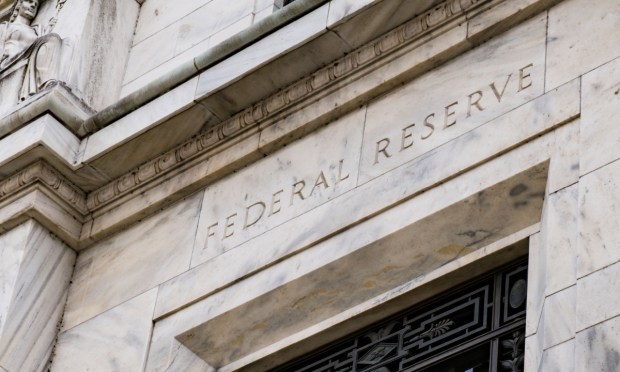
New U.S. payments data from the 2025 Federal Reserve Payments Study, published July 1, showed that for chief financial officers and B2B payments leaders, payments are becoming more operationally dense. The study found that U.S. noncash payments reached 236.6 billion in 2024, up 31.9 billion from 2021. It was the largest three-year absolute increase since the Federal Reserve began estimating U.S. noncash payments volumes in 2000.
Yet total noncash payments value rose to $140.01 trillion, with annual value growth slowing to 2.6%, below the 10.4% annual rate recorded from 2018 to 2021, per the data.
In effect, finance teams are getting more payments events per dollar of value.
That means U.S. finance teams are facing more reconciliation, more exception handling, more remittance matching, more fraud screening and more data normalization. The modernization opportunity is not just faster payments execution; it is lowering the operational cost of every payments event.
That changes how CFOs should measure their firm’s payments performance.
Read also: The $100 Million CFO Doesn’t Keep Score. They Call the Plays.
Rail Specialization Is Turning B2B Payments Into Infrastructure Operations
The Fed’s clearest signal is not that digital payments have arrived. It is that the work has moved upstream and downstream from the transaction itself. The payment is now only one part of the operating system.
A payments stack that works 95% of the time, for example, can still create a large operational burden if the remaining 5% produces high-value exceptions, missing invoice references or supplier disputes. For a finance organization, reliability is not just uptime. It shows up in the labor needed to resolve mismatches, the systems needed to ingest fragmented payments data, the controls needed to govern more endpoints, and the time it takes to convert payments activity into clean accounting truth.
Another emerging signal from the Fed’s payments data is the growth of specialization. Cards accounted for 79% of noncash payments by number in 2024, but only 8% of noncash payments value. ACH, by contrast, represented 74% of total noncash value, with $104.06 trillion in payments, according to the Fed’s data.
That split is the B2B architecture story hiding in plain sight. ACH remains the balance sheet rail. It is built for payroll, supplier payments, recurring account-to-account flows, disbursements and large-value movement where cost, reliability and bank account connectivity matter. Cards, meanwhile, are the workflow rail. They are useful not only because they move money, but because they carry authorization, spend controls, virtual credentials, rebate economics, merchant category data and procurement context.
See also: B2B’s Biggest Innovation Isn’t Technology. It’s the Buying Experience
Credit cards grew more by number than debit cards for the first measured three-year period since 2000, with general-purpose credit cards driving the growth, per the data. That should not be read only as a consumer credit story. For enterprise payments, it points to the growing importance of programmable controls at the transaction edge.
We’d love to be your preferred source for news.
Please add us to your preferred sources list so our news, data and interviews show up in your feed. Thanks!
Virtual cards and commercial cards are not simply substitutes for ACH. They solve a different problem. They let businesses issue credentials for defined suppliers, amounts, time windows and categories. They can reduce exposure, create richer authorization controls and support better procurement governance. In some use cases, the value is less about the rail itself than about the control layer wrapped around it.
The PYMNTS Intelligence report “Time to Cash™: A New Measure of Business Resilience” found that 77.9% of CFOs see improving the cash flow cycle as “very or extremely important” to their strategy in the year ahead.
Forward-thinking B2B payments stacks will not treat ACH, cards, faster payments and checks as a horse race with a single winner, but will instead route payments by use case. Cards for control, faster payments for urgency, and the inert reliance on checks where legacy process, supplier resistance or documentation requirements still dominate.
Read also: Two Years Ago vs. Today: CFOs and the ERP Shift
The Fed Signals B2B Check Displacement Gets Harder From Here
In B2B commerce, checks often persist for reasons that are not solved by offering an electronic alternative. Some suppliers are difficult to enable. Some industries rely on documentation flows that are still tied to payments release. In other cases, the issue is trust. Suppliers want certainty about who is paying, what invoice is being paid, and how the remittance detail will arrive.
Check payments fell to 9.2 billion in 2024, representing only 4% of noncash payments by number, according to the data. Yet checks still accounted for 17% of noncash payments value. The average check value rose to $2,653 in 2024, nearly triple the 2000 average.
That is a potential warning sign for payments providers and finance leaders. The easiest check displacement has already happened. What remains is likely more concentrated in higher-value, more relationship-dependent and more process-bound B2B payments. These are not always checks written because nobody knows better. Businesses already know electronic payments are faster. The harder task is replacing what checks still appear to provide, which is confidence, documentation, control, supplier familiarity and payment certainty.
Check displacement is moving from “offer an electronic option” to “solve the supplier enablement and reconciliation problem.”
“Many of the financial institutions, the larger behemoths, have really, over the last several years, come to the conclusion that they can’t build out most of the enhancements quick enough,” Boost Payment Solutions Founder and CEO Dean M. Leavitt told PYMNTS in May. “Companies like ours that are very agile, that have our ears constantly to the ground in the marketplace and know what the market needs, and maybe what the market needs next year or the year after. It’s working quite well.”
For CFOs, the strategic question is no longer which rail is growing fastest. It is which rail delivers the best mix of cost, control, data, timing and supplier acceptance for each payment type.
For all PYMNTS B2B coverage, subscribe to the daily B2B Newsletter.


 Add as Preferred Source