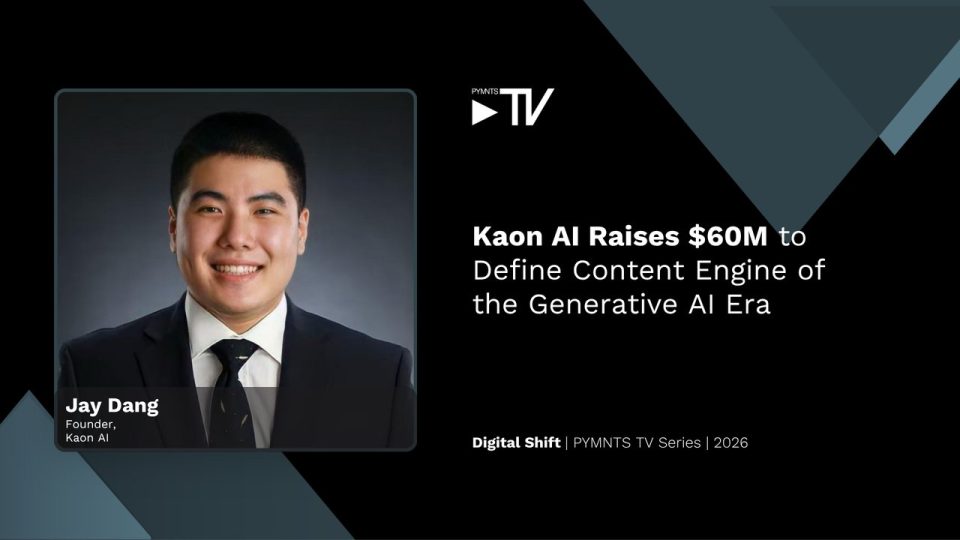
Kaon AI CEO and Co-Founder Jay Dang said the model has a ceiling built into it.
In a conversation with PYMNTS, Dang said Kaon skips algorithmic recommendation altogether. Rather than surface the best existing content, the platform generates new video in real time, building a story world shaped around a specific user’s interests as they interact with it.
“If the perfect piece of content for the user was never made, the algorithm cannot help the user,” Dang said.
The distinction is the whole business. Recommendation systems can only point to the nearest available match. When nothing in the library fits, the system runs out of options. Kaon removes that ceiling by making the content on the spot, based on what the user chooses in the moment.
The approach is drawing capital. The company raised $60 million in Series B funding.
Habitual Use Separates Kaon From Novelty AI Tools
The engagement numbers explain the interest. Kaon has more than 2 million daily active users, each spending an average of 150 minutes a day on the platform. Dang said that level of use puts Kaon in the same range as established social media and video apps, not typical AI tools.
“It’s actually habit-driven, not just a novelty-driven behavior from our users,” Dang said.
That behavior surprised the team. They expected users to treat the product like a chatbot, issuing requests and waiting for a response. Instead, users moved across storylines and characters the way they might browse shows on a streaming app.
We’d love to be your preferred source for news.
Please add us to your preferred sources list so our news, data and interviews show up in your feed. Thanks!
The difference is that users can shape those stories as they unfold, which turns a single session into something closer to a finished episode, except one built for that viewer alone, Dang said. The sense of authorship this creates is what shows up in Kaon’s retention and engagement numbers.
Entertainment is only the starting point, Dang said. It is simply where AI-driven consumer behavior surfaces first because attention is an honest signal of what people want. The pattern will not stop there.
“Any company with the digital touchpoint will face users who expect interactions shaped around them,” Dang said.
Kaon Built Its Own Infrastructure to Support Free Access
Serving individualized story worlds at that scale is expensive, and the economics forced a decision. Kaon built its own infrastructure rather than leaning on third-party AI providers, which lets the company offer unlimited content generation for free, supported by advertising instead of subscriptions, Dang said.
That choice defines what Kaon is and is not trying to win. Netflix still makes the best content in the market, and Kaon is not trying to out-produce it, Dang said. The bet is a story world a user can never exhaust because it is generated fresh each time they open the app. The goal is not studio-level quality but something structurally new, content built around one viewer at a time, with no fixed endpoint.
Cheap content is not the advantage, though. Low cost alone does not make content valuable, Dang said. The harder problem is knowing what to generate for a specific user next, which depends on behavioral data collected at scale. That data compounds as more users interact with the platform, giving Kaon a growing base of signals to draw from.
That data also points to where the company goes next. The next stage is generating content users would not have known to ask for on their own, Dang said. Consumers want to be surprised, but they struggle to describe in a prompt what that surprise should look like. Closing that gap is work the platform must do by learning from user behavior rather than waiting for instructions.
For all PYMNTS AI coverage, subscribe to the daily AI Newsletter.


 Add as Preferred Source