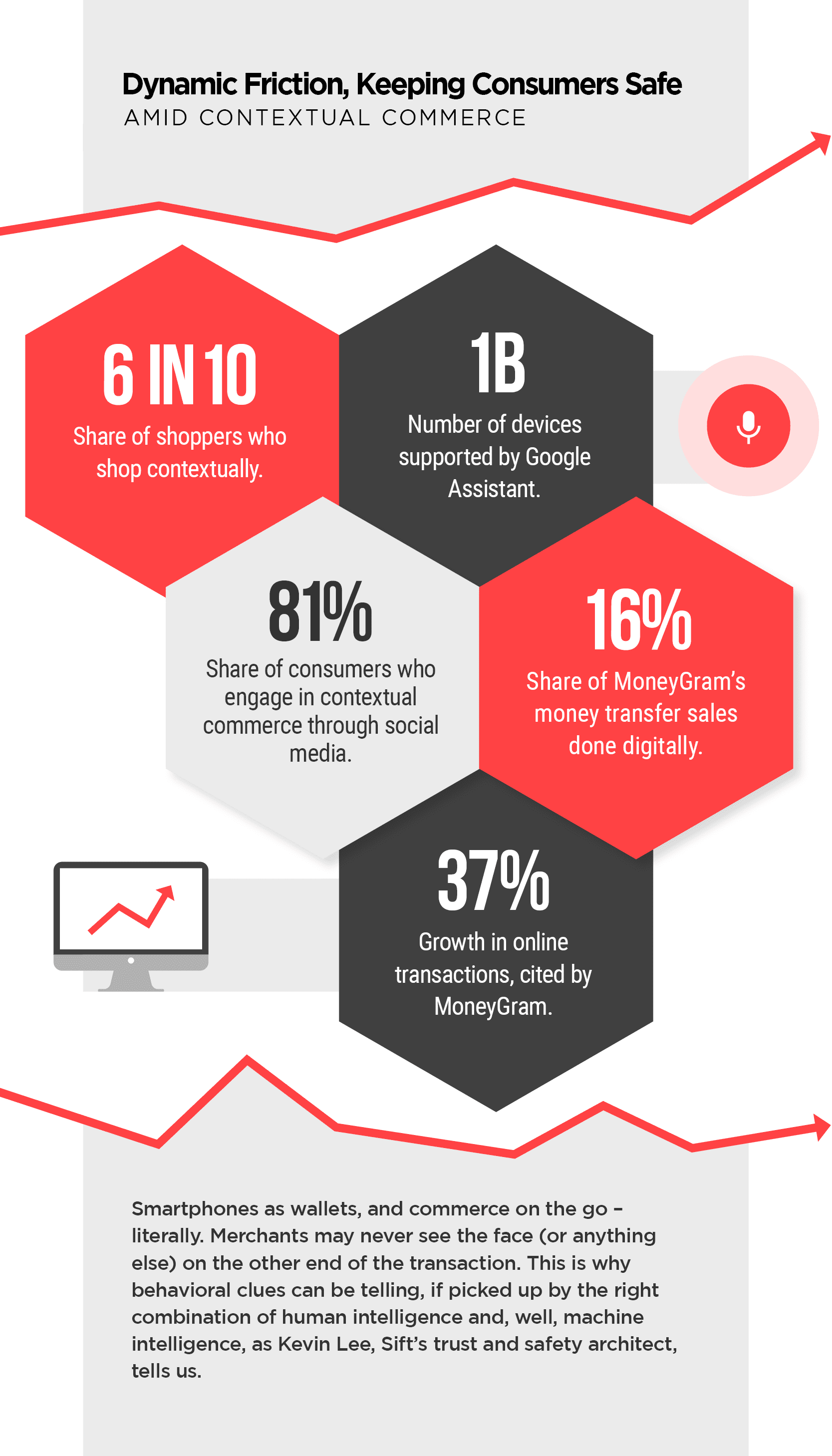
Dynamic Friction, Keeping Consumers Safe Amid Contextual Commerce

Contextual commerce is everywhere, and much desired by consumers (just check out some of the latest stats from the Digital Consumer Report). But merchants need to keep an eye on fraud, even as they endeavor to keep the (digital) wheels of commerce humming. Fighting fraud takes teamwork – a set of brains and eyes (several of them) working in tandem with technology to stop the bad guys in their tracks. Savvy fraud prevention teams can gather up the “digital bread crumbs” – behavioral clues – that can separate bad actors from legitimate consumers, according to Kevin Lee, trust and safety architect at Sift. Rules help, but they are only part of the battle. The trick is putting just the right amount of friction in place as part of a holistic approach, which can stop fraud but also build stronger relationships with those who genuinely want to transact with a merchant.

 Add as Preferred Source