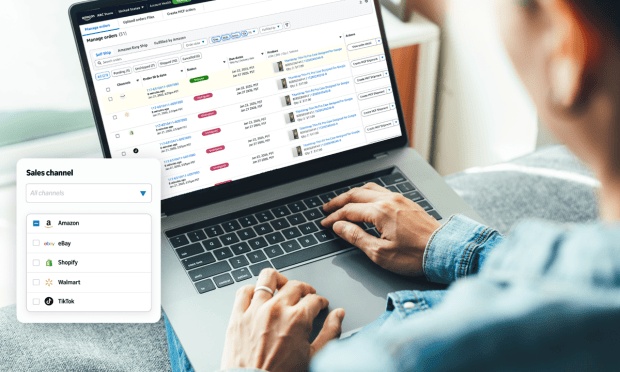
Maybe that Amazon-Walmart rivalry isn’t so fierce after all. Amazon announced Thursday morning (Sept. 24) that it will let marketplace sellers manage orders and shipment tracking from eBay, Shopify, TikTok and Walmart inside Seller Central, extending its seller dashboard to the other places merchants do business.
According to several Amazon executives, sellers in its U.S. store will be able to connect accounts on those four platforms and bring listings and orders into one workspace. The rollout will be gradual and free to sellers. Amazon plans to add more channels and features over the coming months.
Walmart’s inclusion stands out: Amazon is inviting merchants to manage sales on a major retail rival from inside its own software. David Forsythe, Amazon’s VP of North America seller business, told PYMNTS the decision reflects how merchants already operate.
We’d love to be your preferred source for news.
Please add us to your preferred sources list so our news, data and interviews show up in your feed. Thanks!
“For many of those sellers, Walmart is one of those channels,” Forsythe told PYMNTS. “We really believe that when sellers succeed across their entire business, they’re going to succeed on Amazon as well. This is just a reality of having multiple channels, and we want to support sellers across all those channels.”
More than 95% of independent sellers in Amazon’s store sell through multiple channels, according to the company. Those merchants drive more than 60% of sales in its store. Yet a seller who uses several platforms may have to check separate dashboards to find new orders, update product pages and track shipments. The new tools aim to put those jobs in one place.
At launch, sellers can connect their outside accounts, import listings from other platforms and link them to products in their Amazon catalog. They can view sales and orders across channels and arrange fulfillment from Seller Central. Sellers choose which accounts to connect and can disconnect them later, Amazon said. The company said access controls prevent sellers’ outside data from being shared with other sellers or used to inform Amazon’s retail decisions.
Here’s how it would work in practice. Consider a merchant who sells phone cases through Amazon, Shopify and Walmart. Instead of opening three order screens, the merchant can see unshipped orders together in Seller Central. If a customer buys through Shopify, the seller can select that order and ask Amazon to ship it. The software matches the order to the right product, then sends tracking information back to Shopify when the shipment is created. The buyer gets updates without the seller copying a tracking number between systems.
The shared order view also works when a merchant uses another shipping provider. That extends the tool beyond Amazon’s existing Multichannel Fulfillment service, which lets sellers use Amazon’s inventory and logistics network to fill orders placed elsewhere. A seller can manage an outside order in the new workspace without using Amazon to deliver it.
Amazon outlined three other parts of the expansion:
- Product listings: Sellers will be able to revise a description once in Seller Central and have it formatted for each connected channel. They can import outside listings now. The ability to send Amazon’s AI-assisted listings to other channels is coming later. Amazon said sellers created more than 12 million listings ready for sale with its generative AI tools in 2025.
- Profitability: Planned analytics will combine traffic, advertising spending and sales data from connected channels. Sellers could compare what they earn from a product on each platform without assembling separate spreadsheets.
- Rollout: The tools are starting with U.S. sellers at no additional charge. More channels and capabilities are due in the coming months and into 2027, so the full set of listing and analytics functions is not available at launch.
Forsythe said sellers had embraced Amazon’s ability to fulfill orders from one pool of inventory but wanted a clearer view of the rest of their business. He recalled their request: “It’s great I can fulfill all these orders, but I really want to see how this all comes together in one place and I can see what’s going on across all my businesses.”


 Add as Preferred Source