By 2030, the demand for home health care is expected to grow 46%, with more than 1 million new care jobs needing to be filled. The workforce isn’t keeping up.
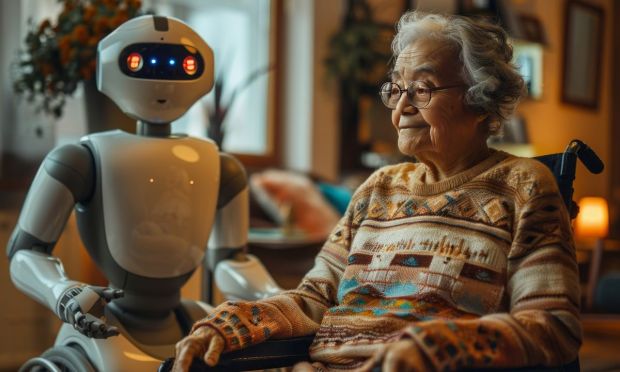
The gap between the number of aging Americans who need daily support and the number of paid and unpaid caregivers available to provide it has drawn a wave of artificial intelligence-powered companion and wellness products into the elder care market. From conversational robots to phone-based AI that monitors cognitive changes, the category has moved from novelty to what some health systems are beginning to treat as infrastructure.
ElliQ, built by Intuition Robotics and deployed through state aging offices across the country, sits at the more established end of the market. A New York State Office for the Aging pilot found that 94% of clients using the device reported feeling less lonely, with users averaging more than 30 daily interactions. A 2026 update to the program showed 97% of participants reported feeling better overall. The device has since been deployed by 15 government agencies across the U.S., a Journal of Aging Research & Lifestyle study noted.
We’d love to be your preferred source for news.
Please add us to your preferred sources list so our news, data and interviews show up in your feed. Thanks!
Newer entrants are taking different approaches. CareYaya’s QuikTok uses a large language model accessible by regular telephone, no smartphone required, designed to hold voice conversations with older adults and passively flag signs of cognitive or mental health changes for families. The low-tech access point is deliberate: It removes the adoption barrier that has kept many digital health tools from reaching the oldest and most isolated users.
Beyond companionship, AI tools in this category handle medication reminders, chronic disease monitoring, fall-risk detection, and mental health check-ins. US News reported that a key advantage of AI companions is their cost relative to human caregiving and their ability to collect wellness data that can be shared with remote family members or clinicians.
Limits of the Category
The market for elder care AI is growing exponentially. That growth is being driven by demographic pressure as much as product maturity.
It’s a difficult category to get right. Older adults with fair or poor mental health reported loneliness rates of 75% in 2024, and the group most in need is also the hardest to reach with consumer technology. AI companions cannot replicate the empathy and emotional depth of human caregiving, and no clinical framework yet governs how AI-derived wellness data flows into formal health records.
Researchers at the University of Michigan concluded that while the pandemic disrupted social connections, loneliness and isolation were substantial both before and after the pandemic years. The tools arriving now are being tested against a problem that predates the technology, and that 82 million older Americans will be living with by 2050.
For all PYMNTS AI coverage, subscribe to the daily AI Newsletter.


 Add as Preferred Source