America’s phone-carrying shopper is becoming less of a bargain hunter and more of an in-aisle decision maker.
That shift stands out in PYMNTS Intelligence’s 2026 Global Digital Shopping Index: U.S. Playbook, “The New American Shopper.” The report finds that consumers now record 51 digital shopping days a month, up from 46 in January 2024. Much of the growth comes from frequent mobile browsers, AI users and higher-income consumers. Its second key finding shows how shopping behavior is changing inside physical stores: Consumers increasingly use phones to make faster, more confident choices instead of simply chasing discounts.
We’d love to be your preferred source for news.
Please add us to your preferred sources list so our news, data and interviews show up in your feed. Thanks!
Key Points:
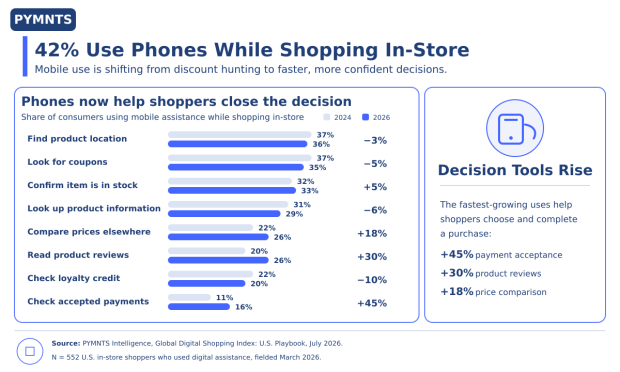
- In-store phone use has moved firmly into the mainstream. Forty-two percent of shoppers used a phone while shopping in a physical store in March 2026, up from 30% in January 2024. Product research on phones reached 39% of shoppers, a 14% increase over the same period. The phone has become a pocket-sized sales associate, helping people answer practical questions before they put an item in the cart.
- Reviews and price comparisons are gaining ground. Twenty-six percent of consumers used their phones to read product reviews in-store, up from 20% in 2024, a 30% increase. The share comparing prices at other merchants rose to 26% from 22%, an 18% gain. These activities suggest shoppers want reassurance that they’re choosing the right product at a fair price. Retailers can support that behavior with clear product information, easy-to-find reviews and consistent pricing across channels.
- Payment choice now enters the shopping journey before checkout. Sixteen percent of consumers checked which payment methods a merchant accepted while they were still in the store, up from 11%, a 45% increase and the largest gain among the activities measured. Coupon and discount searches slipped to 35% from 37%. That contrast gives merchants a useful signal: Shoppers still value savings, but convenience and certainty are playing a larger role in whether a purchase moves forward.
The broader report points in the same direction. Sixty-five percent of shoppers now say payment acceptance influences where they shop, up from 58% in 2023. It also finds that 62% expect to use an AI shopping agent within two years, although only 15% of merchants maintain data that an agent can read. Retailers don’t need a futuristic overhaul to respond. Better mobile product details, visible payment options and reliable checkout can turn the shopper’s phone into a bridge between the aisle and the sale.


 Add as Preferred Source