Secured credit is getting a second look because many consumers are losing confidence that traditional credit will be available when they need it.
The PYMNTS Intelligence report, “Secured Credit’s Next Turn: Unlocking Growth With Dynamic Funding,” finds secured credit is moving beyond its old role as a niche product for people rebuilding credit.
The report argues that tighter access to unsecured credit, combined with pressure on debit revenue, is making secured credit more relevant for banks, FinTechs and consumers. The challenge is that older secured credit models often make the product harder to use than it needs to be.
They can require consumers to lock away cash, manage several balances and wait for delayed updates, all of which can weaken confidence in a product designed to help them move forward.
The opportunity is clearer now because the need is broader. Consumers who cannot qualify for traditional cards still need ways to build credit histories, manage daily spending and stay connected to the mainstream financial system.
We’d love to be your preferred source for news.
Please add us to your preferred sources list so our news, data and interviews show up in your feed. Thanks!
For issuers, secured credit can extend access without requiring looser underwriting. It also creates a revenue path at a time when debit economics remain under regulatory pressure.
Three data points show why the product is returning to the discussion:
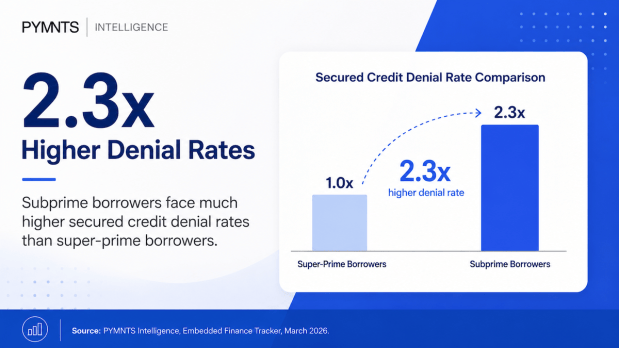
- 2.3x: Subprime applicants face credit card denial rates 2.3 times higher than super-prime borrowers, making traditional credit much harder to obtain for consumers who may already have fewer options.
- 45 million: More than 45 million Americans are underserved or underbanked, representing a large market for credit-building products that are safer and more structured than payday loans or other nontraditional alternatives.
- Two accounts: Many legacy secured credit models require consumers to fund two separate pools of money, one for locked collateral and another for daily repayment.
That double-funding structure can turn secured credit into a liquidity problem.
That last point is where consumer confidence can break down. A traditional secured card may ask a consumer to place $500 in a collateral account to support a $500 credit limit. If that consumer spends $100, the $500 remains locked while the repayment must come from another account. For households with limited cash cushions, that design can make secured credit feel like restricted access to their own money rather than a path to more financial flexibility.
The report points to dynamic funding as one way to fix that. Instead of locking the full deposit upfront, the model secures only what is spent. A consumer with a $500 deposit who spends $100 would have only that $100 secured, while the remaining $400 stays liquid. That structure can make the product easier to understand, reduce customer-service issues and give consumers a clearer view of their available funds.
For issuers, the upside is also operational. Real-time funding, automated balance updates and simpler account structures can reduce reconciliation work and exception handling. That makes secured credit easier to scale.
The positive angle is that declining confidence in unsecured credit access does not have to push consumers outside mainstream finance. A better-designed secured credit product can offer a practical bridge. For banks and FinTechs, the next phase of secured credit may be less about reviving an old product and more about redesigning it for consumers who need clarity, liquidity and a credible path back into credit.
At PYMNTS Intelligence, we work with businesses to uncover insights that fuel intelligent, data-driven discussions on changing customer expectations, a more connected economy and the strategic shifts necessary to achieve outcomes. With rigorous research methodologies and unwavering commitment to objective quality, we offer trusted data to grow your business. As our partner, you’ll have access to our diverse team of PhDs, researchers, data analysts, number crunchers, subject matter veterans and editorial experts.


 Add as Preferred Source