Amazon’s third-quarter earnings brought the same concern that shadowed Alphabet’s results a day earlier: whether enormous artificial intelligence investments will deliver enough profit and cash to dispel fears of a spending bubble. Thursday’s (Oct. 29) call revolved largely around AI and Amazon Web Services, which CEO Andy Jassy said could become a trillion-dollar revenue business within five to 10 years.
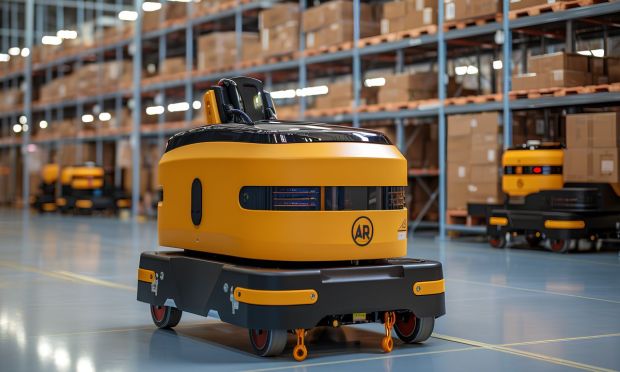
But another milestone deserved attention: Amazon now has more than a million robots working in its fulfillment network.
That figure puts a physical dimension on an AI discussion usually dominated by chips and data centers. Amazon expects robots to handle more repetitive work, lower delivery costs and help get orders to customers faster.
Responding to an analyst who asked about robotics priorities for 2027, Jassy said the company’s progress remains small compared with what he expects over the next five years.
“I think you’ll see we will always have a lot of teammates in our fulfillment centers, but I think a lot of the jobs that we have that are more repetitive, that we have humans doing, will be done by robots,” he said.
Jassy said new fulfillment facilities, including those supporting same-day delivery, will rely heavily on robotics. Amazon is also exploring how robots could help cover the final hundred yards to customers’ doors. Deployment depends on whether the machines improve productivity, safety, costs and delivery times.
Chief Financial Officer Brian Olsavsky supplied another measure of that expansion: Amazon doubled its fleet of robotic arms such as Cardinal and Sparrow in 2026. It’s also developing AI models that make robots easier to program and capable of more complex physical tasks. He credited robotics and AI with measurable productivity and safety gains.
We’d love to be your preferred source for news.
Please add us to your preferred sources list so our news, data and interviews show up in your feed. Thanks!
Betting on the Agentic Future
Amazon’s ambitions for digital workers are similarly broad. Jassy described a future in which agents become part of everyday business software, helping companies complete tasks rather than simply generate answers.
“I believe virtually every modern enterprise production application will be rewritten to be agentically capable,” he said, arguing that businesses will need those capabilities to move faster and address security risks.
Amazon is positioning AWS to supply both the tools companies use to build agents and services they can put to work immediately. Jassy said tens of thousands of customers use Bedrock AgentCore, deploying twice as many agents during Q3 as in the preceding three quarters combined.
Its ready-made offerings include Amazon Connect for contact centers and Amazon Transform for technology migrations. Jassy also cited growing adoption of workplace assistant Amazon Q by companies including 3M and Southwest Airlines. During the analyst discussion, he emphasized that businesses want access to multiple AI models with strong security and control over who can use them. That supports Amazon’s effort to become the operating foundation for enterprise AI.
The spending remains substantial. Amazon expects approximately $220 billion in cash capital expenditures this year and meaningfully more in 2027.
According to its earnings release, Amazon’s revenue rose 12% to $201.9 billion, while operating income climbed to $28.1 billion from $17.4 billion. AWS sales increased 39% to $46 billion. Net income declined to $20.7 billion from $21.2 billion, primarily reflecting investment gains that boosted the prior-year comparison. Free cash flow swung from a $14.8 billion inflow to a $42.4 billion outflow over the trailing 12 months, driven largely by AI investment.
For all PYMNTS AI coverage, subscribe to the daily AI Newsletter.


 Add as Preferred Source