Searching for something online used to mean typing a few words and scanning a list of links. Google’s replacing that with a conversation and monetizing every turn of it.
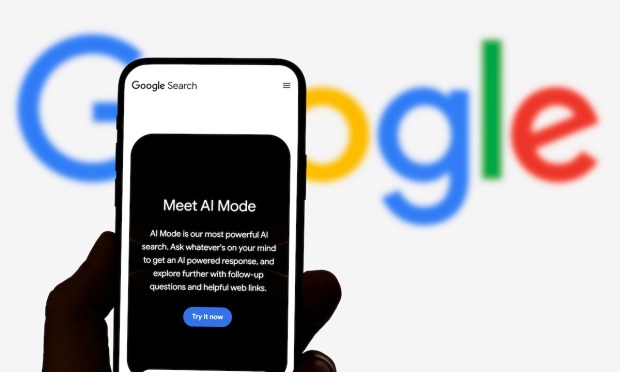
At Google Marketing Live last week, Google introduced Conversational Discovery ads, Highlighted Answers and Business Agent for Leads, all embedded directly inside AI Mode, its Gemini-powered conversational search experience.
Conversational Discovery ads serve product recommendations in response to open-ended prompts. Highlighted Answers insert sponsored results into AI-generated recommendation lists. Business Agent for Leads replaces static contact forms with a Gemini-powered brand chatbot inside the search interface. Google said 75% of users make faster and more confident decisions using AI Mode.
Built on a $60 Billion Quarter
Google’s conversational ad push runs on infrastructure rivals haven’t built.
PYMNTS reported that Google Search and advertising revenue reached $60.4 billion in Q1 2026, up 19% year over year, running counter to predictions that AI-generated answers would hollow out Search’s ad business. Merchant Center, the Shopping graph and Performance Max campaigns feed directly into the new conversational formats. Advertisers don’t need to rebuild campaigns. Their existing product feeds and conversion signals extend into the new placements.
Google said that more than 30% of search ad spend now uses AI-enabled campaign tools. Queries in AI Mode run three times longer than traditional searches.
Where Rivals Stumbled
We’d love to be your preferred source for news.
Please add us to your preferred sources list so our news, data and interviews show up in your feed. Thanks!
OpenAI’s attempts to introduce advertising have repeatedly run into user resistance.
TechCrunch reported that Chief Research Officer Mark Chen acknowledged the company “fell short” with promotional messages and disabled app suggestions after paying subscribers complained about seeing promotions for companies like Peloton and Target embedded in their conversations. The ad team resources were reallocated to a model accuracy task force after CEO Sam Altman issued a code red memo prioritizing core quality, according to The Wall Street Journal. The backlash was sharpest among paid subscribers, who didn’t expect promotional content at price points up to $200 a month.
Google’s formats carry “Sponsored” labels and sit in a marked section below the main organic answer. Gemini writes an independent AI explainer alongside each ad, synthesizing product information separately from advertiser creative. AI Mode has surpassed 1 billion monthly active users globally.
Checkout Moves Inside Search
The ad formats are one layer. The transaction infrastructure underneath them is another.
Google’s Direct Offers pilot now includes native checkout for Universal Commerce Protocol merchants, letting shoppers complete purchases inside AI-assisted search flows. Chewy, Gap and L’Oréal are already using the format. Expedia and Booking.com are set to join as well.
Universal Cart launch partners include Nike, Sephora, Target, Ulta Beauty, Walmart and Wayfair, with Affirm and Klarna embedded as buy-now-pay-later options inside Google Pay. Google said the retailer stays merchant of record regardless of where the transaction completes. Search revenue grew 19% in Q1. Native checkout inside AI Mode is the next test of whether that holds.
The competitive and infrastructure questions converge at the same point. Advertisers face a measurement gap. Conversational queries don’t map cleanly onto the keyword-level attribution models that have governed search campaign performance for two decades.
For all PYMNTS AI and digital transformation coverage, subscribe to the daily AI and Digital Transformation Newsletters.


 Add as Preferred Source