Healthcare costs are squeezing consumer confidence from both ends of the age spectrum.
Baby boomers and seniors in the United States face steep routine bills, while Generation Z reports increases in out-of-pocket expenses, according to the PYMNTS Intelligence report “Generations Under Pressure: How Younger Consumers Are Coping With Higher Living Costs.” The report, based on a survey of 2,747 U.S. adults, found that 51% of consumers struggled to manage daily living expenses, virtually unchanged from October.
We’d love to be your preferred source for news.
Please add us to your preferred sources list so our news, data and interviews show up in your feed. Thanks!
Yet the healthcare data revealed a more specific source of strain. Medical costs are landing like a second monthly rent payment for many households, recurring often enough to reshape budgets and weaken consumers’ confidence in their ability to stay ahead.
Key findings from the report:
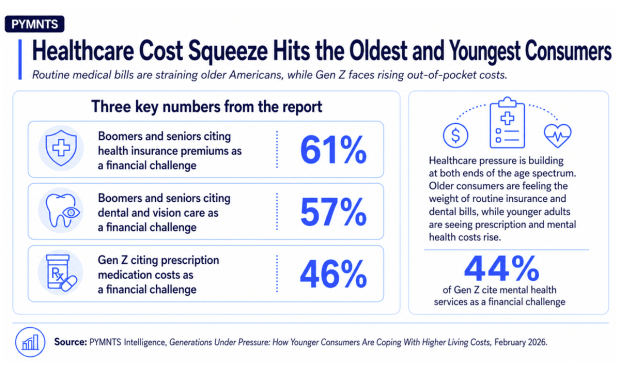
- In January, dental and vision costs posed a financial challenge for 57% of baby boomers and seniors, up 13 percentage points from October. Health insurance pressure also rose 5 points to 61%, while concern about medical bills and copays increased to 55%.
- Prescription costs were a challenge cited by 46% of Gen Z in January, a 12 percentage-point increase in three months. Mental health costs produced a similar jump, rising 11 points to 44%, while dental and vision pressure climbed 7 points to 48%.
- The share of consumers who said their cost-management strategies were extremely or very effective was 25%, down 9 percentage points from October. Among consumers using four or more coping strategies, confidence fell 15 points to 21%.
The positive opening for banks, FinTechs and healthcare payment providers lies in making these costs easier to anticipate and manage. Older consumers may benefit from predictable billing, simpler payment schedules and tools that smooth recurring expenses. Younger consumers may respond to clearer pricing, flexible installment options and real-time views of what they owe across providers.
The report also found that young adults use more strategies to cope with rising costs. About 1 in 5 bridge millennials, millennials and Gen Z consumers rely on four or more tactics, including cutting spending, taking extra work, borrowing from family or using installment plans. Across the full sample, 69% cut everyday spending and 52% delayed major purchases.
The adjustments showed that consumers are acting, even as confidence slips. Financial providers that reduce uncertainty around recurring healthcare bills could give households more room to plan, preserve cash flow and regain a sense of control.
At PYMNTS Intelligence, we work with businesses to uncover insights that fuel intelligent, data-driven discussions on changing customer expectations, a more connected economy and the strategic shifts necessary to achieve outcomes. With rigorous research methodologies and unwavering commitment to objective quality, we offer trusted data to grow your business. As our partner, you’ll have access to our diverse team of PhDs, researchers, data analysts, number crunchers, subject matter veterans and editorial experts.


 Add as Preferred Source